
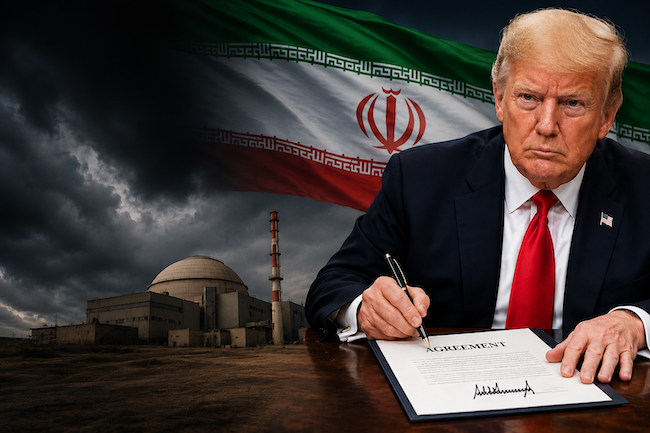
Pakistani Prime Minister Shehbaz Sharif officially announced on Sunday night that a peace deal between the US and Iran, which includes Lebanon, has been reached.
“Following intensive talks, we are pleased to announce that the Peace Deal between the United States of America and Islamic Republic of Iran has been REACHED. Both sides have declared the immediate and permanent termination of military operations on all fronts, including in Lebanon,” stated Sharif.
He added that the official signing ceremony will take place this coming Friday, June 19, in Switzerland.
US President Donald Trump also announced the deal in a post on Truth Social.
“The Deal with the Islamic Republic of Iran is now complete. Congratulations to all! I hereby fully authorize the toll free opening of the Strait of Hormuz, and, simultaneously herewith, authorize the immediate removal of the United States Naval blockade. Ships of the World, start your engines. Let the oil flow! President DONALD J. TRUMP,” he wrote.
He later posted another message about the deal, writing, “This Great Deal will bring Peace and Security to the whole Region. Many presidents have tried to make Peace with Iran, and all have failed before me. The Leaders of the Region have, for the first time, found a President who can help them achieve real Peace. With the opening of the Strait upon the signing of the Deal on Friday, for purposes of mine removal, oil will flow on both ends again for the Region, and the World!”
AFSI Insight
President Trump’s announcement of a completed agreement with Iran is met with deep skepticism and concern. While welcoming any genuine effort to prevent Iran from obtaining nuclear weapons, history has repeatedly shown that the Iranian regime uses negotiations, ceasefires, and diplomatic agreements to gain time, secure economic relief, and preserve its long-term strategic objectives. We highly doubt whether the deal contains sufficient verification mechanisms and whether Iran will truly abandon its nuclear ambitions. Any sanctions relief or economic incentives should be conditioned on complete, verifiable dismantlement of Iran’s nuclear infrastructure rather than promises of future compliance. The reported memorandum of understanding appears to leave major nuclear issues to subsequent negotiations, a fact that would heighten our concerns.
We are also troubled that Israel was not a central participant in shaping the agreement despite being the country most directly threatened by Iran and its regional proxies. Israel must retain complete freedom of action against Iranian nuclear facilities, ballistic missile capabilities, Hezbollah, and other Iranian-backed terrorist organizations. Lasting peace can only be achieved when Iran’s nuclear threat and terror network are fully dismantled—not merely paused through temporary diplomatic arrangements. This is almost certainly only possible through regime change which would also answer the promise to the Iranian people that “help is on the way.” Almost 40,000 Iranians have been slaughtered by this regime in 2026 alone. How can any deal with whoever is in charge now be trusted?