Open post

Same Unresolved Issues Bring No Deal

Vice President JD Vance said on Sunday that 21 hours of peace talks in Pakistan between the United States and Iran ended without an agreement to stop the war.

“They have chosen not to accept our terms,” Vance told reporters in Islamabad, but stressed that there is still a chance for a deal. “We leave here with a very simple proposal: a method of understanding that is our final and best offer,” he said. “We’ll see if Iran accept it.”

“The bad news is we have not reached an agreement,” Vance said. “And I think that’s bad news for Iran much more than it’s bad news for the United States of America.”

Iran quickly blamed the White House for the failure of the talks. The Tasnim and Fars news agencies, which are linked to the Revolutionary Guards, said the main disagreements were over the Strait of Hormuz and Iran’s “nuclear rights.”

Will the talks with Iran be renewed? Possibly. By early Sunday, three main sticking points remained, according to the NY Times, citing two Iranian officials familiar with the talks: the reopening of the Strait of Hormuz, the fate of nearly 900 pounds of highly enriched uranium, and Iran’s demand that about $27 billion in frozen funds held abroad be released.

AFSI’s take:
Given a negotiation partner such as the Islamic Regime in Iran, we did not anticipate that an agreement would be achieved. They are unlikely to relinquish their enriched uranium, and their aspirations regarding nuclear capabilities continue to be significant. Hardliners continue to hold power, even though there is no definitive indication of who is at the helm of the regime. Without a complete change in the regime, it is uncertain how much longer further negotiations can persist. The subsequent action is yet to be determined.

Source:
After 21 Hours, Vance Walks: No Iran Deal, by David Israel/The Jewish Edition, April 12, 2026


Open post

Zini Changes the Status Quo

Sources in Israel’s security and law enforcement agencies are warning that the Shin Bet’s Jewish division is facing a serious crisis. That’s the division responsible for fighting “Jewish terrorism,” or, as the State Dept. calls it, even under Marco Rubio and Donald Trump, “settler violence.” According to Haaretz criminal correspondent Josh Breiner, the situation has become worse since David Zini was appointed as head of the Shin Bet.

Sources cited by Josh Breiner say that David Zini places secondary importance on violence by “settlers” and right-wing activists in Judea and Samaria. According to these sources, he does not define attacks on PA Arabs in Judea and Samaria as “Jewish terrorism.” Instead, they say Zini tends to describe such cases as “incidents of friction” between Jews and Arabs.

AFSI’s take:
The flawed mentality of the Shin Bet is finally undergoing transformation. Contrary to widespread belief, acts of violence by Jews in self-defense do not constitute Jewish terrorism. It is high time that the scales of justice in this area be recalibrated.

Source:
Haaretz Outcry: Shin Bet Chief Zini ‘Does Not Recognize Jewish Terrorism’, by David Israel/The Jewish Edition, April 10, 2026


Open post

This Ongoing Campaign Must End

About two hours before the start of Shabbat last week, Border Police forces and Civil Administration inspectors carried out coordinated operations at several Israeli homesteads across the Samaria region, acting on orders from senior IDF commanders in Central Command and the Judea and Samaria Division.

During the activity, a residential structure near Nofei Nehemia was demolished, while at other locations authorities enforced closed military zone orders. Security forces, accompanied by engineering equipment, also demolished a sheepfold at one homestead. Residents claimed they were not given time to remove personal belongings, alleging that the home was destroyed with furniture, food, and Shabbat supplies still inside.

At the same time, the security forces enforced a closed military area order at a homestead near Shiloh, evicting residents from the area. At a homestead near Hebron, residents reported being prevented from reaching their homes during the operation.

AFSI’s take:
The ongoing campaign against pioneering residents in this area must stop. We encourage focus on the application of sovereignty throughout Judea and Samaria, and operations like this will cease. Without doing so, Israel’s sovereignty continues to remain under siege.

Source:
Two Hours Before Shabbat: Homesteads demolished in Samaria, by Israel National News, April 11, 2026


Open post

Trump Declares a Ceasefire

U.S. President Donald J. Trump announced a ceasefire with Iran on Tuesday, after having previously threatened to destroy Iran’s entire civilization. The agreement calls for Iran to allow safe passage through the Strait of Hormuz. The ceasefire is intended to facilitate peace talks between the two nations. The ceasefire does not apply to Lebanon.

Despite the declaration of a ceasefire, Israel’s Red Alert App continues to go off forcing Israelis to continue to seek shelter.

The IDF on Friday identified that the Hezbollah terrorist organization launched rockets from a school compound in the Tir Zibneh area in southern Lebanon.

In newly released IDF footage, the heat signature of the launcher is clearly visible as it is transferred in real time within the school grounds, constituting the use of civilian infrastructure for military purposes in violation of international law.

Following the identification, and in accordance with international law, the IDF struck the premises in order to remove the threat to the State of Israel.

The IDF says it “views with severity the Hezbollah terrorist organization’s cynical use of civilian infrastructure for military activity and will continue to operate against the organization’s military infrastructure in accordance with international law to defend the State of Israel.”

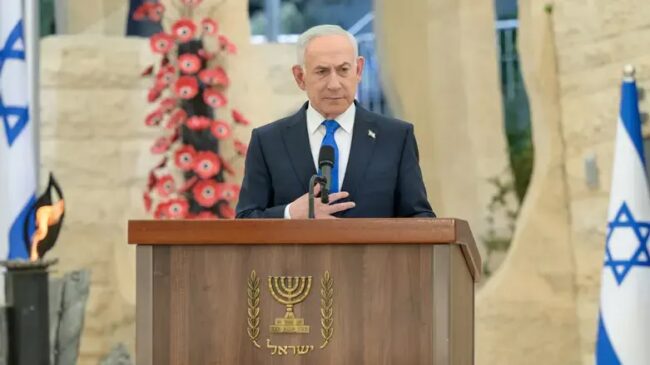
Prime Minister Benjamin Netanyahu said on Thursday that he had ordered his government to start direct talks with Lebanon focused on disarming Hezbollah, signaling openness to diplomacy a day after the Israeli military escalated its offensive in the country.

AFSI’s take:
Ceasefires have been used repeatedly in previous situations. Many believe that the ceasefire proposed by Trump will be tenuous and there are many moving parts. In Israel, terrorist attacks continue unabated, and the attackers fail to recognize that Israel will not be obliterated, destroyed, or diminished. It is time to move past this and begin living as civilized individuals. The era of barbarism has ended. It is time for these terrorist groups to adapt accordingly. In other words, get over it – Israel is here to stay!!

Source:
Live updates: Donald Trump declares ceasefire with Iran, by Israel National News, April 10, 2026


Open post

A Step to Apply Sovereignty in Law and in Practice

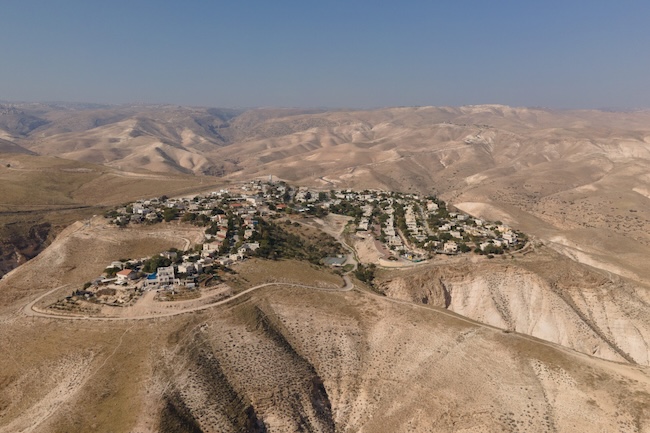
Although not officially announced, the Israeli cabinet’s decision to establish or formalize 34 new Jewish communities in Judea and Samaria drew reactions inside Israel and abroad. Supporters in the broader camp backing Jewish communities in the area presented it as a major step to strengthen Israel’s presence there.

Finance Minister Bezalel Smotrich framed the policy as a way to block the creation of a Palestinian “terror state,” while Energy Minister Eli Cohen called related infrastructure expansion for the newly approved communities “historic,” saying Israel was applying “sovereignty in law and in practice.”

The plan calls for nearly every major community bloc to receive at least one additional locality, including near the Green Line, to strengthen continuity, strategic corridors, transport routes and long-term residential growth; some would be newly built, others would legalize existing outposts, mostly in Area C, the part of Judea and Samaria under full Israeli control.

AFSI’s take:
MK Smotrich has been tireless in his work to block the creation of a Palestinian state and we applaud him. The declaration and application of sovereignty across Judea and Samaria MUST be the next step. What is Israel waiting for? On that note, please see our next article on Tuvia Tenenbom’s new book and interview with Arutz Sheva on this subject.

Source:
Major New Community Plan for Judea and Samaria Draws Reactions, by Kostis Konstantinou/TPS-IL, April 10, 2026


Open post

Tuvia on Judea and Samaria: If This is Yours Take It!

Tuvia Tenenbom, spoke to Arutz Sheva-Israel National News, following the publication of his new book.

After living with the Europeans and writing about them, and living with the Haredim and writing about them, and living with the Muslims and writing about them, Tenenbom decided to move to a community in Samaria and write about life in the communities of Judea and Samaria. Alongside his admiration for the local residents, he also offers considerable critique.

Tenenbom explains that his book, Excuse Me, Is This Yours? came about, as in previous cases, following a suggestion from his editor to go out and write about the residents of Judea and Samaria, similar to earlier assignments where he was asked to integrate into various communities and write about them.

To gain a more complete picture, Tenenbom also met with opponents of the Jewish communities in Judea and Samaria, who helped him access Arab areas, meet representatives from the Palestinian Authority, and enjoy authentic knafeh from Shchem (Nablus). In refugee camps, he refused to be afraid, even when identified as Jewish by Arabs. Fear, he says, is characteristic of those who have not come to the land and do not truly know the Arabs.

Tuvia was also struck by the realization that Israel has controlled Judea and Samaria for nearly sixty years but has yet to apply its sovereignty over the area. Logically, if the land belongs to Israel, there is no reason not to apply sovereignty.

AFSI’s take:
Tuvia has the most insightful and objective view of the numerous issues facing Judea and Samaria. His book will be a must read for all Zionist activists.

Source:
Tuvia Tenenbom: ‘Is Judea and Samaria yours? You gotta believe it’, by Yoni Kempinski/Israel National News, April 6, 2026


Open post

This Was Not Necessary as War Rages Against Israel

Sunday night was especially tense in Samaria: a large force of Border Police officers and Civil Administration personnel raided a new encampment recently erected near the community of Migdalim.

During the operation, which began in the middle of the night, the forces destroyed several structures and seized logistic equipment and personal items belonging to the residents.

The raid enraged the residents of the area and settlement activists who arrived at the scene to protest the eviction.

After the forces concluded the demolition and left the site, a serious security incident occurred. Hundreds of Palestinian Arabs from nearby villages, who noticed the forces’ presence and the demolitions, began to gather and march toward the encampment.

According to residents, during the incident, incitement was heard from the nearby villages, with the muezzin encouraging the crowds. At one point, a real danger arose for the families in the area.

Intense clashes broke out at the scene, during which the Arab rioters threw rocks and launched fireworks toward the Jewish civilians and the security forces who remained to defend the area.

The residents claim that IDF forces in the area did not initially intervene, and only after a while did additional residents from the area arrive and assist in repelling the rioters.

AFSI’s take:
A raid of this nature is entirely unnecessary. The occurrence of the operation during nighttime, coupled with the involvement of a “large force,” highlights the sensitivity and potential volatility of such situations. This was merely a small encampment of peaceful Jews, not a group of terrorists intent on annihilating Israel. In wartime, this only exacerbates tensions for all inhabitants. We encourage focus on the application of sovereignty throughout Judea and Samaria, and raids like this will cease. Without doing so, Israel’s sovereignty remains under siege.

Source:
Hundreds of Arabs descend on encampment following eviction, by Israel National News, April 6, 2026


Open post

Dilemma or Lack of Oversight?

The chief oversight body responsible for tracking U.S. foreign assistance says United Nations agencies are stonewalling a probe into their ties to Hamas. The agencies have failed to provide investigators with information that could identify their employees as affiliates of the terror group, according to a non-public report transmitted to Congress and obtained by the Washington Free Beacon.

The U.S. Agency for International Development (USAID) inspector general’s office, an investigative entity separate from USAID, sent letters to six separate U.N. agencies in December 2025 asking them to name all employees “who worked on U.S.-government funded awards” and provide their contact information and “date and place of birth.” The office also asked the agencies to detail their “interactions with Hamas,” among other requests.

“OIG has consistently raised concerns about UN cooperation, transparency, and willingness to provide information to investigators who request UN records pertinent to U.S.-funded awards,” it continues.

AFSI’s take:
That U.N. agencies working in Gaza remain vulnerable to Hamas infiltration points to a long-standing structural dilemma, i.e., Hamas’ rule in Gaza, rather than a simple failure of oversight. Ultimately, the tension between humanitarian access and security control is inherent in areas like Gaza. Addressing it requires constant adjustment, external scrutiny, and political will—not just from the U.N., with its consistent anti-Israel bias, but from all stakeholders involved.

Source:
UN Agencies Are Stonewalling a Probe Into Their Employees’ Ties to Hamas, US Investigators Say in Report to Congress, by Adam Kredo/Washington Free Beacon, April 3, 2026


Open post

Ben-Gvir: “Problematic and Incorrect”

The Supreme Court held a hearing on Sunday on a petition requesting permission to open the Western Wall and the Temple Mount to hundreds of worshippers.

The petition followed a ruling a day earlier allowing large-scale demonstrations in Habima Square, a decision that drew criticism from religious and traditional communities, who argued it reflected unequal enforcement of freedom of assembly.

During the hearing, Court President Yitzhak Amit emphasized the need to balance competing considerations. He noted that seeing the Western Wall largely empty during the Priestly Blessing broadcast was “embarrassing,” describing the site as the spiritual center of the Jewish people. However, he also cautioned that differences between secured areas like Habima’s parking facilities and the more exposed Western Wall plaza must be taken into account.

Ben-Gvir reiterated his criticism of the earlier court decision permitting demonstrations, calling it “problematic and incorrect.” He warned against mass gatherings at demonstrations or holy sites, urging the public to act responsibly. At the same time, he argued that once protests were approved, authorities could not impose stricter limitations on access to the Western Wall and Temple Mount, saying such a distinction would unfairly discriminate against worshippers.

AFSI’s take:
This petition challenges the long-standing status quo at the Temple Mount, where Jewish prayer is highly restricted when it should never be. When other religions are not fully restricted at the Temple Mount or other sacred places of worship neither should Israelis be. We understand that safety at the Western Wall and on the Temple Mount are a valid concern during this war, but we would hope that innovative Israelis would find a way to allow at least small groups to be present at those most meaningful sites. It’s that simple.

Source:
Police request approval to open Western Wall and Temple Mount, by Israel National News, April 5, 2026


Open post

Next Year in Judea and Samaria!

Doubling the number of Jews in Judea and Samaria is the strategic imperative of the next two years. Op-ed by Yonaton Behar.

For decades, Israelis have debated the future of Judea and Samaria. Some speak about borders, others about diplomacy, and still others about security arrangements. But after the trauma of the October 7 attacks, one truth has become unmistakably clear: Israel cannot afford illusions about geography, sovereignty, or demography.

The next two years present a rare and historic window of opportunity. With Donald Trump serving as President of the United States, Israel has an administration in Washington that has previously demonstrated unprecedented understanding of Israel’s historical rights and security needs.

Today, Israel must apply that lesson to Judea and Samaria. First and foremost, Judea and Samaria are not foreign lands. They are the cradle of Jewish civilization. Hebron, Shiloh, Beit El, and countless other places in this region are where the Bible unfolded and where the Jewish nation first took root. For the Jewish people, these hills are not merely strategic terrain-they are sacred inheritance.

For thousands of years, Jews prayed to return to the land promised to our forefathers. The connection between the Jewish people and this land is recorded in Scripture, reaffirmed through centuries of exile, and realized in the rebirth of the State of Israel. Building Jewish communities in Judea and Samaria is therefore not an act of expansion-it is an act of return.

The Million-Jew Plan: Israel should adopt a clear national goal: bring one million Jews to Judea and Samaria within the next two years. This is ambitious-but entirely achievable.

AFSI’s take:
Passover celebrates some of the greatest miracles ever experienced in Jewish history and is a time to reach above nature to the miraculous. So we say, L’Shana Haba’ah for a Whole Israel!

Source:A million Jews in Judea and Samaria, by Yonaton Behar/Israel National News, April 1, 2026

Posts navigation

1 2 3 4 197 198 199
Scroll to top