
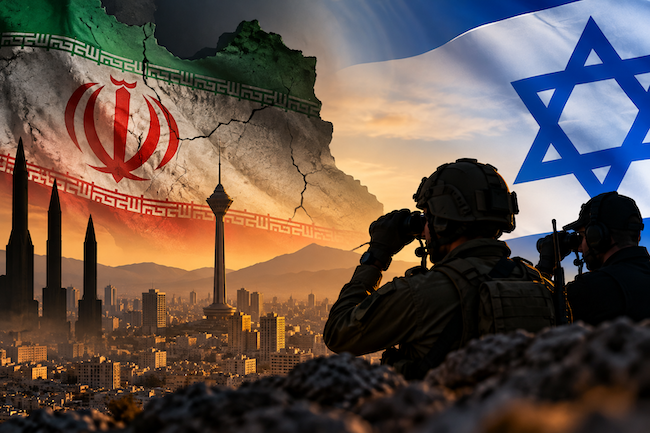
Israel Targets the Source of Iran’s Terror and Aggression
Israeli Prime Minister Benjamin Netanyahu said on Wednesday that he had directed the Israel Defense Forces, Mossad and other security branches to pursue the overthrow of the Iranian regime, calling it the only way to eliminate the nuclear threat from Tehran.
“There is only one way to remove this threat once and for all: overthrow the regime in Iran. And that is my directive to the IDF, the Mossad and the security branches,” Netanyahu told an IDF officer course graduation ceremony.
“As long as they are here, as long as they strive to acquire horrific weapons, the State of Israel faces an existential threat,” Netanyahu said. “And our duty, the duty of all of us, is to save the nation.”
AFSI Insight
AFSI views the prospect of ending Iran’s current regime as a critical security issue for Israel. The Iranian regime’s support for terrorist organizations and its threats against the Jewish state underscore the need to confront the source of regional aggression. Any strategy aimed at regime change must be backed by sustained intelligence, military preparedness, and a clear commitment to protecting Israel’s long-term security.
AFSI supports Israel’s determination to eliminate the Iranian regime’s nuclear threat and its ongoing efforts to prevent Tehran from rebuilding its weapons capabilities. Netanyahu’s directive reflects the recognition that Israel’s security requires confronting not only Iran’s nuclear ambitions but also the regime that supports terrorism and threatens Israel’s existence.
Source:
Netanyahu orders IDF, Mossad to pursue overthrow of Iranian regime, by JNS Staff, October 22, 2026

Britain’s Double Standard: Sanctioning Israel for Building on Its Own Land
Israeli Foreign Minister Gideon Sa’ar on Monday hit back at Britain’s Labour government, after U.K. Foreign Secretary Ed Miliband threatened sanctions against companies bidding to build in the E1 area near Jerusalem.
“Judea and Samaria are not foreign lands to the Jewish people,” Sa’ar wrote on X. “Our historical rights are not subject to approval from London.”
He said the days when Jerusalem would “quietly accept threats, sanctions and attempts to dictate its policies are over.”
Sa’ar urged London to address “the serious challenges facing its own country” instead of pursuing a “relentless campaign against the Jewish state.”
Bidding on the E1 (“East 1″) project, which closes on Monday, covers 1,234 housing units. The area lies in an undeveloped area within the municipal boundaries of Ma’ale Adumim, located between Jerusalem and the developed area of Ma’ale Adumim.
AFSI Insight
Britain’s threat of sanctions over Israeli development in E1 exposes the international double standard targeting the Jewish state for exercising its rights in its historic homeland. E1 is strategically vital to Israel’s security and the future of Jerusalem. Rather than pressure Israel to surrender its heartland, Britain should recognize that Judea and Samaria are integral to Israel’s historical and security interests. Israel must not allow foreign threats or political intimidation to dictate its sovereign decisions.
Judea and Samaria: Beyond Oslo, Toward Sovereignty
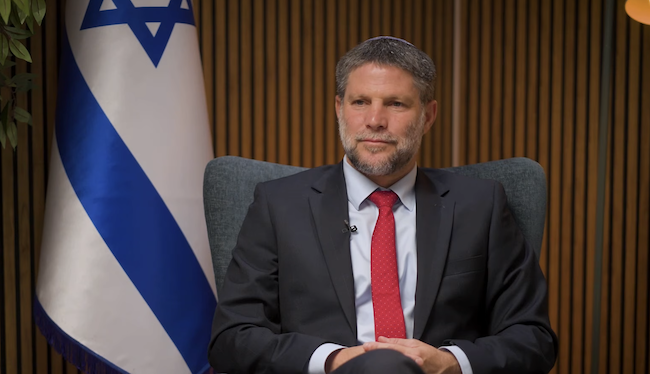
Just one week before the elections, Religious Zionism is stepping up its campaign and reaching out to new audiences. In his first-ever interview with the popular Abu Ali Express Telegram channel, Finance Minister Bezalel Smotrich outlined his positions on security, settlement policy, and the economy.
During the interview, Smotrich addressed a wide range of issues, including his call to dismantle the Palestinian Authority, his ambitious plans for developing the Negev and Galilee, the evacuation of Khan al-Ahmar, his performance as Finance Minister during the war, the “settler violence” campaign, and the controversy surrounding haredi military conscription.
On the Palestinian Authority and the Oslo Accords, Smotrich stated: “The Palestinian Authority finances and encourages terrorism. It is also behind the delegitimization campaign against the settlement movement and orchestrated provocations that drag us into confrontations and generate a massive BDS campaign against the State of Israel. It must be dismantled.”
On his vision for the Negev and Galilee, Smotrich emphasized the importance of establishing new communities and agricultural farms to strengthen Israel’s presence and security in these regions.
“We need to establish communities and farms to secure the territory and create both security and a sense of security. When our farms are spread throughout the Negev, there will suddenly be far less smuggling. The same applies to the north. We need to establish a presence on the ground, change perceptions, and create a sense of success.”
AFSI Insight
AFSI welcomes Bezalel Smotrich’s call to cancel the Oslo Accords and dismantle the Palestinian Authority. Oslo’s failed framework has undermined Israel’s security and emboldened those seeking to divide the Jewish homeland. AFSI has long advocated ending the Oslo process, rejecting the two-state agenda, and asserting Jewish sovereignty over Judea and Samaria as essential to Israel’s security and future.
A New Security Doctrine: Victory, Not Containment
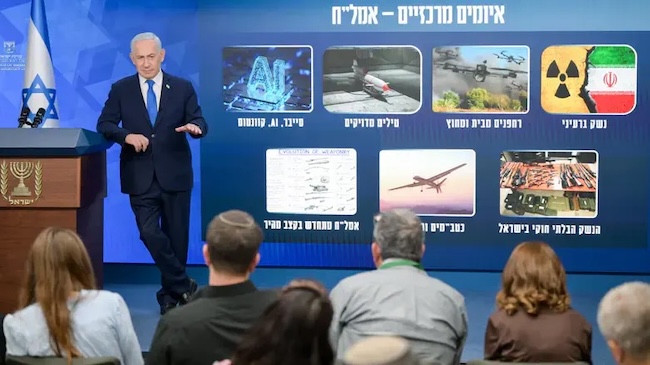
Israeli Prime Minister Benjamin Netanyahu on Sunday informed the public of Israel’s new National Security Doctrine.
“The October 7, 2023 attack compelled Israel to wage a fierce war,” Netanyahu began. “Through continuous combat – from Gaza to Yemen, from Lebanon to Iran – Israel warded off an imminent existential nuclear threat and removed the chokehold of the Iranian axis. The Government and the Security Cabinet made well-considered decisions, the IDF and security branches struck with immense force, and the civilian home front stood firm.”
“The War of Redemption necessitated an upgrade of fundamental principles within the traditional national security doctrine, among them: giving priority to prevention and offense over containment and defense, including launching preemptive strikes to thwart evolving threats; strengthening home front defense against new threats; cementing Israel’s status as a regional power; building maximum independence in munitions; ensuring superiority in the most advanced technologies; and intensifying the fight against global waves of antisemitism. Concurrently, opportunities have been created for forging new alliances in our region and beyond.”
AFSI Insight
Israel’s security doctrine must be grounded in deterrence, decisive offensive action, and the determination to eliminate threats before they endanger the nation. AFSI welcomes the emphasis on preemptive strikes, military independence, and strengthening Israel’s presence throughout the Land of Israel, including Judea and Samaria. October 7 demonstrated the catastrophic consequences of relying on containment rather than confronting terrorism. Israel must maintain its freedom to act, defeat its enemies, and never compromise its security or historic rights in pursuit of international approval.
After the Disastrous Disengagement, Jewish Pioneers Return to Gaza
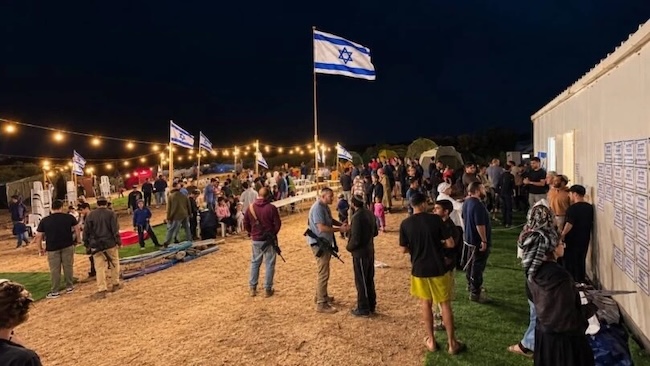
The Nachala movement established a new community called “Pioneers of Gaza” overnight near the Gaza border, placing several caravans and temporary structures in Shakhmoni Forest, near Kibbutz Kfar Aza.
More than 700 people took part, according to the movement, including bereaved families, wounded IDF veterans, Rabbonim, MKs and other public figures. The move follows nearly three years of Nachala activity promoting renewed Jewish community development in Gaza.
“We are happy to announce that we established a temporary community overnight facing the city of Gaza, on the way to renewing settlement in the Gaza region,” the movement said, calling this a first step toward returning to the communities of Gush Katif.
AFSI Insight
The establishment of the “Pioneers of Gaza” outpost represents a bold step toward restoring a Jewish presence in Gaza after Israel’s painful withdrawal from Gush Katif in 2005. AFSI has long maintained that Jewish communities in Gaza, which is historic Israel, are essential to Israel’s historical rights, national security, and future. The government should support these pioneers and recognize that a lasting victory over Hamas requires more than military action—it demands a clear commitment to Jewish sovereignty, strategic security, and rebuilding Jewish communities in the Land of Israel.

Fivefold Surge in Attacks Demands Action in Judea and Samaria
A sharp increase in Arab terrorist attacks and violent incidents across Judea and Samaria has been recorded since the beginning of October, with the daily rate of reported incidents rising approximately fivefold compared to September.
According to an investigation published last Thursday by Olam Katan, based on incident reports collected by the emergency response organization Hatzalah Judea and Samaria Without Borders, 63 incidents were documented between October 1 and October 13, compared to just 29 throughout the entire month of September.
The increase has accelerated within October itself. During the first seven days of the month, 27 incidents were recorded. Another 36 were documented during the following six days.
AFSI Insight
The fivefold surge in reported attacks across Judea and Samaria underscores the growing danger facing Jewish residents, farmers, shepherds, and motorists. From rock-throwing and attempted stabbings to firebombs and suspected livestock poisonings, these incidents demand urgent action and stronger security measures. AFSI calls on Israel to protect its communities, farms, and access roads, strengthen its security presence, and advance Jewish development and sovereignty throughout Judea and Samaria rather than pursue concessions that endanger Israeli lives.

Winning the Information Battle for Israel’s Heartland
The Yesha Council on Tuesday officially launched the Judea and Samaria Situation Room (JSR), a centralized source for real-time updates on developments on the ground.
Operating in Hebrew and English, the new information hub aims to provide the public, media outlets and key stakeholders in Israel and around the world with reliable, up-to-date information. It will also serve as a professional resource for addressing misinformation and campaigns targeting the communities of Judea and Samaria and the Jewish state.
“Today, we are launching a groundbreaking initiative of national importance for Israel’s image and standing in the world,” said Yisrael Ganz, Governor of the Binyamin Regional Council and chairman of the Yesha Council. “We have brought together the best technology, expertise, and professionals to build something that has been missing for years: the eyes of Judea and Samaria. A single, reliable source of information, directly connected to the ground, that presents the true picture of what is happening here.
“Faced with an industry of lies and fake news that seeks to turn false accusations into accepted facts, we are responding with facts, evidence, and truth. We will no longer leave the narrative in the hands of those seeking to vilify the communities of Judea and Samaria and the State of Israel. JSR will serve as the go-to source for anyone in Israel or around the world who wants to know what is really happening in Judea and Samaria.”
AFSI Insight
AFSI welcomes the Yesha Council’s launch of the Judea and Samaria Situation Room as an important step toward countering misinformation and exposing the realities on the ground. By providing real-time reports, footage, and verified information, this initiative can help challenge false accusations against Jewish communities and ensure that the truth about Judea and Samaria reaches the international media and public. Israel must take control of its narrative and defend the Jewish people’s historic homeland with facts, evidence, and transparency.
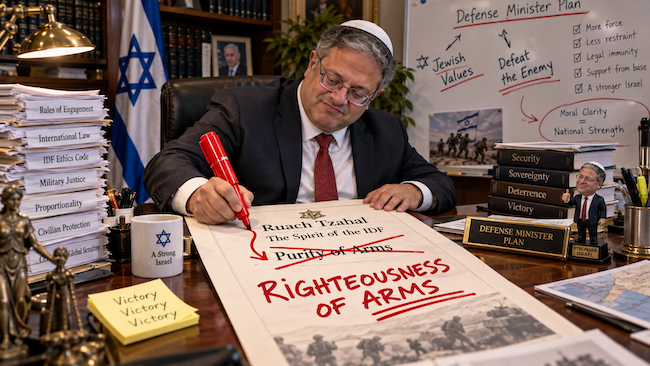
Victory Is Not a Dirty Word: Rethinking IDF Ethics
National Security Minister Itamar Ben-Gvir, chairman of the Otzma Yehudit party, unveiled a proposal Thursday to overhaul the IDF’s ethical code, known as Ruach Tzahal (“Spirit of the IDF”), as part of his plans to seek the Defense Ministry portfolio in the next government.
The most significant change would replace the longstanding military principle of Tohar HaNeshek (“Purity of Arms”) with Tzidkat HaNeshek (“Righteousness of Arms”).
Under the proposed wording, soldiers would use their weapons to defeat the enemy, guided by the Jewish teaching, “If someone comes to kill you, rise early and kill him first.”
AFSI Insight
AFSI supports the principle that the IDF’s primary mission must be to defeat Israel’s enemies and ensure the security of the Jewish people. Replacing “Purity of Arms” with “Righteousness of Arms” reflects the importance of grounding military ethics in Jewish values, the Bible, and the just cause of defending the Jewish homeland. Israeli soldiers must be empowered to win wars decisively, protect their fellow soldiers, and defend Israel without allowing misplaced restraints to undermine victory.
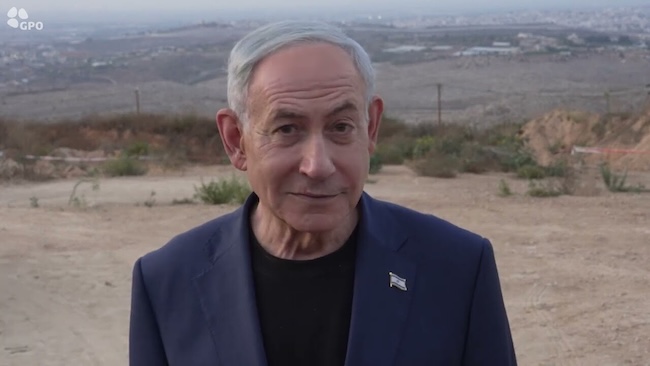
Israel Must Defend Its Heartland —Not Surrender It
Prime Minister Benjamin Netanyahu issued a stern warning Tuesday to the Palestinian Authority against turning its weapons on Israel, declaring that any such attack would be met with overwhelming military force.
“We are prepared for any scenario, including what is called a ‘turning of weapons,’” Netanyahu declared during a security tour along the seam line near Tulkarm. “I advise our enemies not to test us. You will encounter a force here that you never dreamed of.”
Netanyahu said Israel was aware of threats and the possibility that its enemies might seek to test Israel ahead of the elections but emphasized that the IDF was prepared to respond decisively.
Netanyahu said Israel had received warnings that its enemies might attempt to attack ahead of the upcoming elections. He added that the IDF had presented him and Defense Minister Israel Katz with a strong operational response plan.
AFSI Insight
AFSI believes Israel’s security demands unwavering control over Judea and Samaria and the rejection of any foreign Arab army west of the Jordan River. Netanyahu’s warning underscores the danger of allowing hostile forces to gain a foothold near Israel’s vulnerable coastal heartland. Israel must retain the freedom to act against terrorism, prevent terrorist strongholds from being rebuilt, and strengthen Jewish communities throughout Judea and Samaria. Israel’s security cannot be outsourced, and its historic homeland must not be surrendered to appease outside pressures.

Judea and Samaria Under Attack: Israel Must Strengthen Its Defenses
A series of attacks against Israeli residents, shepherds, and hikers across Judea and Samaria over the weekend left several people injured, while a separate poisoning incident killed several goats, according to Hatzala Judea & Samaria and the Israel Police.
Rock-throwing incidents were reported at multiple locations, including near Deir Abu Mash’al, Rechelim, Al-Mughayyir, Ateret, and the Barkan Industrial Zone.
An Israeli shepherd, Or Nachman, was seriously injured by rocks thrown west of Al-Mughayyir.
Other victims sustained minor injuries, including a youth from Givat Tidhar who was struck in the head when dozens of Palestinians, accompanied by foreign “anarchists,” approached the hilltop.
Shepherds were also attacked with clubs south of Ateret, while a shepherd from Mevaser Shalom sustained blunt-force injuries in an assault attributed by Hatzala to Palestinians from Uzzarin.
At Kele David Farm near Neve Tzuf, a disturbance involving rock-throwing included an attempt to seize a resident’s weapon. The attacker was lightly injured and evacuated by the Red Crescent, according to the report.
AFSI Insight
The wave of attacks across Judea and Samaria—including rock-throwing that seriously injured an Israeli shepherd, assaults on Jewish farmers, suspected explosive devices, and the poisoning of livestock—underscores the growing threat facing Jewish residents. These are not isolated security concerns; they highlight the urgent need for stronger protection of Jewish communities, farms, and access roads. AFSI maintains that Israel must strengthen its security presence and advance Jewish development and sovereignty throughout Judea and Samaria rather than make concessions that put Israeli lives at risk