

Iran Cries Unfair
Following earlier reports of Iranian dissatisfaction with the US proposal to end the war, a senior Iranian official described Tehran’s initial reaction to Washington’s war-ending proposal – transmitted through Pakistan – as “one-sided and unfair,” Reuters reported Thursday, while leaving open the prospect of a diplomatic breakthrough should the US adopt a more realistic approach.
The official disclosed to Reuters that the document “was reviewed in detail on Wednesday night by senior Iranian officials and the representative of Iran’s Supreme Leader.”
“In brief, the proposal suggests that Iran would relinquish its ability to defend itself in exchange for a vague plan to lift sanctions,” the official told Reuters.
The official acknowledged there was “still no arrangement for negotiations, and no plan for talks appears realistic at this stage,” even as Turkey and Pakistan continued pressing forward with efforts to “establish common ground between Iran and the United States and reduce differences.”
AFSI’s take:
As Trump persists in seeking a diplomatic resolution, officials from Israel and the West, although not taken aback by Iran’s dismissal, are closely monitoring for an opportunity for an individual within the Iranian regime to emerge to engage in negotiations prior to the government’s complete collapse.
Liberman: The Threat is Real
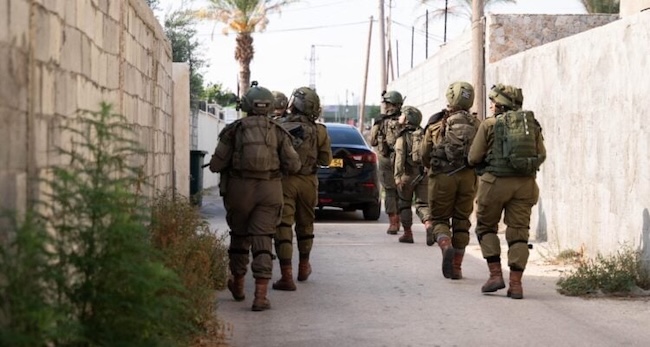
Two members of the Knesset have sounded the alarm in recent days over the potential for a massacre in Judea and Samaria reminiscent of the October 7 atrocities, urging community leaders to strengthen their preparedness.
In a letter, sent earlier this week, Liberman said Palestinian Authority police forces are undergoing training resembling specialized army units. He warned that these forces are focusing their resources on gathering intelligence on Israeli army installations and Jewish communities in the region, rather than actively combating terror groups such as Hamas.
Separately, during a Knesset speech on Tuesday, Likud MK Avichai Buaron warned that the “Palestinian Authority has trained 60,000 fighters for invasion and attack,” referencing a report from Regavim.
AFSI’s take:
Preserving a strong Jewish presence in Judea and Samaria is seen as essential to preventing another October 7, based on the belief that vulnerability invites attack while rooted communities deter it. Judea and Samaria residents are viewed as living under constant threat from Palestinian terrorists, showing daily resilience and vigilance. While critics argue the issue is more complex, our perspective holds that presence itself is a critical form of protection. Of course we would prefer to see Sovereignty; but short of that, the growing presence of strong Jewish communities, both new and established, in Judea and Samaria must be applauded.
Source:
MK warn of Oct. 7th-style massacre in Judea and Samaria, by World Israel News Staff, March 25, 2026
MK Katz: The IDF is There
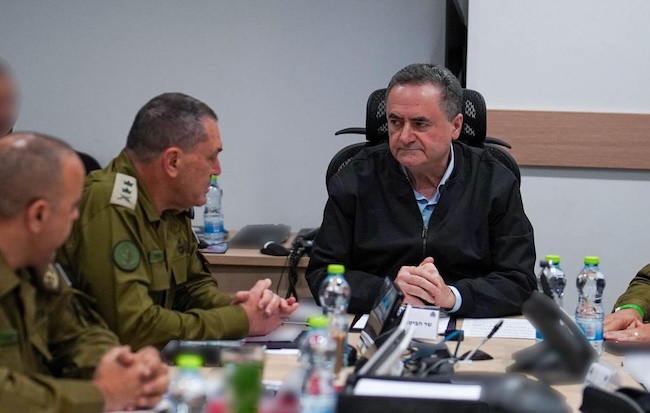
Twenty-six years after the Israel Defense Forces were ordered to withdraw from the longtime security buffer established in southern Lebanon, Defense Minister Israel Katz announced Tuesday the IDF will remain in the area south of the Litani River.
“The IDF will continue to operate in Lebanon with full force against Hezbollah,” Katz said during a situation assessment with top military and defense brass held at the IDF’s Kirya Headquarters in Tel Aviv.
“The principle is clear: Terror and missiles means no houses and no residents, and the IDF is there,” Katz emphasized.
“Hezbollah made a serious mistake when it attacked Israel as a tool of the Iranian terrorist regime, and it is paying and will pay a heavy price.”
AFSI’s take:
This represents a notable change in stance, illustrating the extent to which the strategic landscape has evolved since Israel’s withdrawal from southern Lebanon in 2000. At that time, the decision to withdraw was influenced by a combination of domestic exhaustion and the perception that ending the occupation would alleviate tensions—particularly with Hezbollah. However, in practice, Hezbollah occupied the void, solidified its military presence, and significantly increased its rocket capabilities. Several important points are indicated here: 1. Emphasis on deterrence rather than engagement. 2. A direct challenge to the existing status quo established by UN resolutions. 3. This raises the potential for escalation yet may be intended to avert a larger conflict. 4. Additionally, it serves as a form of political communication.

Surprised, Not Surprised
Israel was not surprised by U.S. President Donald Trump’s announcement of “good and productive talks” with Iran and his decision to suspend, for five days, a threat to strike Iranian energy infrastructure, Israeli officials said Monday.
Israeli officials said that behind the scenes, intensive contacts have been underway between Washington and Tehran, both directly and through mediation by Qatar and Turkey, aimed at reaching a deal.
According to those officials, a potential framework under discussion would see Iran allow the reopening of the Strait of Hormuz in an initial phase, with the United States refraining from attacking Iranian power plants. A broader ceasefire would be pursued in a second stage.
Israel had supported the option of a large-scale strike on Iranian energy infrastructure, despite the expectation that Iran would retaliate against similar targets in Israel. However, a diplomatic official said Israel is expected to align with Trump’s decisions.
Officials said Trump has not removed the military option but rather paused it to allow time for negotiations, with the primary goal of securing the reopening of the strategic waterway and creating conditions to end the war.
AFSI’s take:
Iran has refuted claims regarding these discussions, whereas Trump asserts that they have engaged in conversations with an individual of considerable influence in Iran. Although the conflict is not concluded, it is undergoing continuous development. At the very least, the topic of de-escalation is starting to be addressed. Next steps will tell If the regime in Iran remains in the hands of IRGC-affiliated extremists and whether or not the Iranian people will experience freedom. Whatever happens will determine Israel’s future.
Here is the Difference
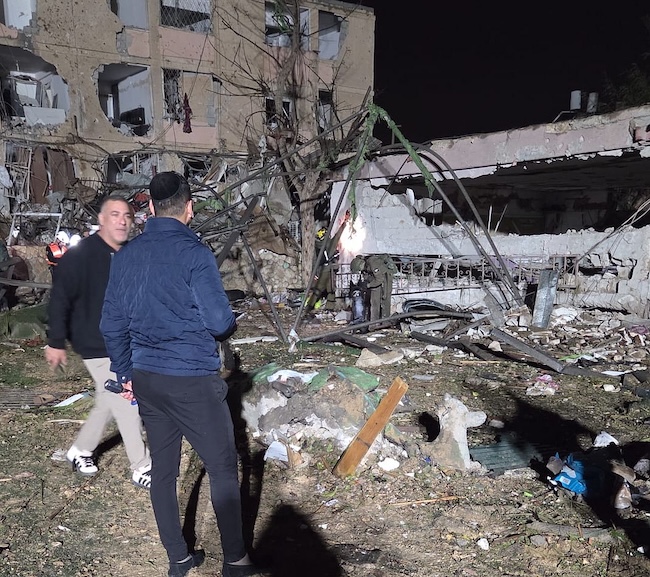
At least 60 people were wounded on Saturday in an Iranian ballistic cluster missile attack on the southern Israeli city of Dimona. A few hours later, the Negev city of Arad also came under missile fire, with a direct hit on a central residential neighborhood. At least 115 people were wounded, including 10 with serious injuries, but miraculously there were no deaths.
The rockets hit nine residential buildings, but many others were also damaged, including a Leumit Medical Clinic, the Avishur Elementary School and the Arad Mall. Rescue workers declared a mass casualty event.
Iranian missile fragments — including a huge warhead that damaged multiple homes and surrounding buildings — rained down on multiple sites in Dimona. A seven-story building was struck, and multiple vehicles were set ablaze.
Most of the victims were hurt while racing for shelter, although some had shrapnel injuries and others suffered severe anxiety.
The attacks came after a long day of Iranian missile fire aimed mostly at central and northern Israel, with some of the attacks coordinated with Tehran’s proxy in Lebanon, Hezbollah.
AFSI’s take:
Iran’s aim is a multi-front assault to intentionally target and hurt the Israeli population. Israel focuses on targeting Iranian sites to eradicate the terrorist infrastructure. See the difference?

Are They Listening?
“Hello, how are you? Is this Commander Fathi Zadeh?” the Israeli Mossad agent asks at the start of the phone call.
“Who are you? Hello?” the senior Iranian police officer responds.
“Are you listening?” the Israeli intelligence agent continues in Farsi. “We know everything about you, you are on our blacklist, and we have all the information about you.”
“OK,” the Iranian officer, identified as Mohsen Fathi Zadeh, head of the Protection and Intelligence Organization of the Law Enforcement Forces (LEF) of Iran, replies in the recording.
The Israeli agent continues: “Your daughter’s name is Zahara, and your wife’s name is Jahanbachsh, your mother’s name is Nadia, and your father’s name is Husain. I called to warn you in advance that you should stand with your people’s side. And if you will not do that, your destiny will be as your leader’s [Ayatollah Ali Khamenei]. Is that clear?
“Brother,” the Iranian commander responds, “I swear on the Quran I’m not your enemy I’m a dead man already; just please come help us and cut off the head of all of the commanders.”
The call, a recording of which was sent to JNS by Israeli intelligence sources, was one of hundreds that Israeli Mossad agents made to senior Iranian security officials since the outbreak of the war on Feb. 28, in an effort to weaken the regime and its supporters.
“This reveals the extent of the Israeli penetration into the Iranian governmental system,” IDF Brig. Gen. (res.) Yossi Kuperwasser, an intelligence and security expert, told JNS on Sunday. “It is part and parcel of Israel’s goal to weaken the Iranian regime to create the condition for the Iranian people to change it.”
“There is no doubt that this is weakening the regime, but it is too early to say if this will do the job,” Kuperwasser said. “It is hard to determine at what point the regime is so weak that the people will rise up against it. Time will tell.”
AFSI’s take:
With a significantly weakened regime and no single person designated as the leader of Iran, it is time for the remaining officials to confront reality. The brutal civilization they created must come to an end.

Top Two Down, Another on Shaky Ground
Israel eliminated Iran’s de facto leader, Supreme National Security Council chief Ali Larijani, and the head of the country’s feared Basij paramilitary police, Gholamreza Soleimani in a wave of airstrikes carried out overnight Monday night.
Dozens of Israeli Air Force warplanes attacked Iranian intelligence centers and command headquarters in the strikes, which also eliminated Soleimani’s deputy, and Islamic Jihad’s Number Two, Akram al-Ajouri.
“The completed strikes are part of an ongoing effort focused on deepening the damage to the Iranian terror regime’s core systems and weakening its capacity to threaten the State of Israel,” the IDF noted.
Rumors swirling today say that as Iran’s political order fractures from within, President Masoud Pezeshkian is said to be weighing resignation, a move that would effectively surrender what remains of the civilian government to the Revolutionary Guards.
Sources close to the Iranian presidency say Pezeshkian has spoken privately of “handing over the keys,” a stark euphemism for stepping down, amid mounting evidence that the Islamic Revolutionary Guard Corps engineered or permitted the death of Ali Larijani, a senior statesman seen as a potential post-Khamenei power broker and a figure to whom Pezeshkian was personally close.
AFSI’s take:
In spite of this latest significant takedown of Iran’s two top leaders, the total collapse of the regime has not yet happened. If Pezeshkian voluntarily steps down that’s a blow to the regime too. Nevertheless, the continuous removal of high-ranking political and security officials may exacerbate divisions within Iran’s leadership and its overall military framework, consequently increasing the chances of wider destabilization.
Iran’s Pezeshkian Weighs Resignation Amid IRGC Conspiracy Theories, by Jfeed Staff, March 18, 2026
Israel’s Quiet Initiative…
Due to the fight against Iran’s proxy in Gaza, Hamas, living conditions in Gaza continue to deteriorate. A growing number of residents are desperately seeking a way out, with an Israeli initiative appearing to be one of the sole efforts working to quietly help Gazans reach a new life outside the war-torn enclave.
Since May, at least three flights carrying Gaza residents who signed up to leave have landed in destinations including Indonesia and South Africa, led by the Israeli “Ad Kan” organization, according to the findings of an investigation by the Associated Press published in the Washington Post. (WaPo account required to view this article.)
Ad Kan reportedly worked through another company, Al-Majd Europe a humanitarian organization supporting Palestinian communities in conflict zones.
Ad Kan founder Gilad Ach said he is proud to support Gazans who wish to leave the territory and seek safety elsewhere. He also said the flights were humanitarian in nature and organized to assist Palestinians looking to escape Hamas rule and the dangers of ongoing war. Some travelers, he said, contributed toward the cost of the journey.
Ach rejected claims from South African officials that the flights were part of an effort to “cleanse” Gaza of Palestinians, insisting that those who departed did so voluntarily after reaching out for assistance.
AFSI’s take:
AFSI is proud of its friends at Ad Kan. An operation like this is truly unique among the nations and Israel is a shining example. The Jewish Nation State has faced decades of terrorist attacks, resulting in the loss of countless Israeli lives, enduring significant PTSD, seeking refuge in shelters more times than one can remember and living with the understanding that the enemy wants to totally annihilate you. Nevertheless, Israel manages to extend a helping hand to the opposing side and with no publicity or spotlight expected. It is indeed perplexing, isn’t it? Only in Israel. It will be interesting to observe how the broader media covers this remarkable display of kindness and unselfish concern for the welfare of others.

A Clear Message Sent
The Lod District Court on Monday released the “settler” who was detained by the Shin Bet about a week ago and prevented from meeting with a lawyer. In its decision, the court sharply criticized the police appeal. Attorney Nati Rom of the Honenu legal aid society commented, “The district court’s decision sends a message against the use of extreme investigative measures against settlers.”
Rom said, “The district court’s decision to reject the state’s appeal and release my client immediately should send a clear message against the excessive and disproportionate use of extreme investigative measures. The use of the system’s harshest tools – Shin Bet interrogations, solitary confinement, and preventing meetings with a lawyer – against “settlers” in Judea and Samaria in such a manner harms innocent people and undermines the sense of justice. Today’s release is warranted, but the path to reforming the system is still long.”
AFSI’s take:
Nati Rom’s contributions to the Israeli people to protect and preserve their rights to receive a fair judicial process deserves recognition and should never be undervalued. We firmly support the reform of Israel’s severely flawed justice system in Judea and Samaria.
Source:
Court Deals Blow to Shin Bet, Frees Settler, by David Israel/The Jewish Edition, March 17, 2026
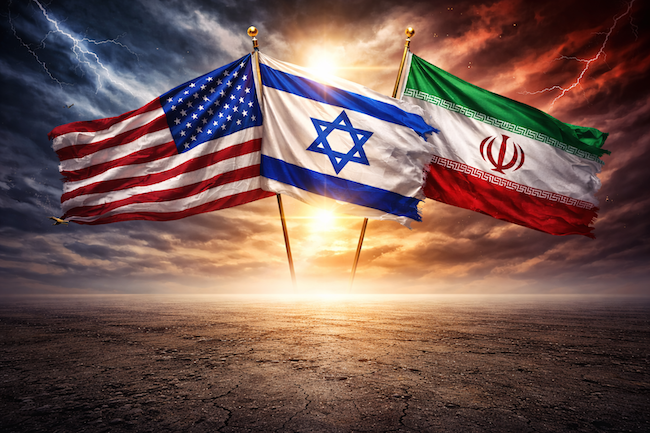
Talking Again
The United States has opened a dialogue with Iran, President Donald Trump said overnight, even though the chances of reaching any kind of agreement in the near future are slim.
On Sunday night, Trump spoke with reporters on Air Force One regarding Iran and the Strait of Hormuz.
In response to questions regarding the possibility of a negotiated end to the current conflict with the Islamic Republic, the president said that the two countries are already engaged in talks, while downplaying the significance of the discussions.
“They want to negotiate badly, as they should. We’re talking to them. But I don’t think they’re ready,” Trump said, before condemning the regime as “violent and vicious,” denouncing its leaders as “horrible people” who have “destroyed the country.”
AFSI’s take:
One might assume that resuming dialogue is beneficial. Nevertheless, in this instance, there is no aspect concerning nuclear weapons that the United States or Israel will agree to. Iran’s Foreign minister claims the regime has never asked for a ceasefire. As Trump has indicated, if Iran’s arsenals and manufacturing are genuinely weakened, a complete disarmament, coupled with a change in regime, is the sole path to achieving successful negotiations with Iran. While this may not align with Iran’s desires, it is essential for Israel and the broader international community’s end goals.
Sources:
US in talks with Iran – Trump, by World Israel News Staff, March 16, 2026