Open post

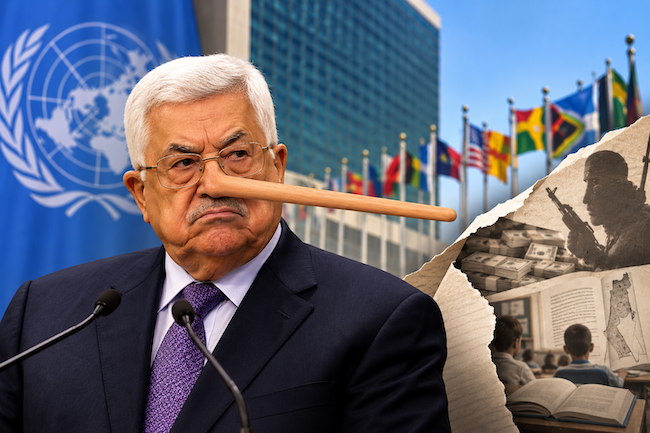
Abbas’s Reform Rhetoric Doesn’t Match Reality

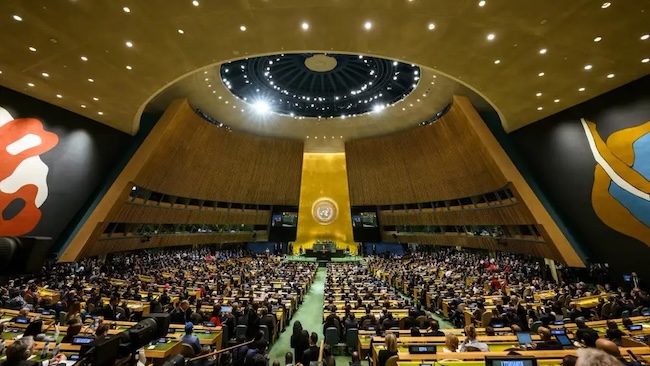
In a pre-recorded speech played at the United Nations General Assembly on September 24, Palestinian Authority (PA) President Mahmoud Abbas presented an extraordinarily positive picture of the reforms he claims his government has carried out. According to Abbas, the PA has fulfilled the commitments it made to the international community.

“We have completed the national reform program to which we committed ourselves before our people and the international community,” Abbas announced. He went on to say that the Palestinian leadership had “strengthened institutional governance, public financial management, transparency, accountability, the fight against corruption, and the rule of law.”

Abbas also claimed that his government had established a “unified national system of social protection and welfare based on need,” continued reforming the education system “in accordance with international standards,” and was advancing “democratic renewal and the empowerment of women and young people.”

AFSI Insight
Abbas’s declaration of “reform” should not be accepted at face value. If the PA continues to support terrorism, promote incitement, and educate another generation against Israel, then changing the language or structure of its programs is not genuine reform. The international community must judge the Palestinian Authority by its actions—not its promises—and should not reward empty declarations with greater legitimacy or support.


Source:
Abbas tells UN reforms are complete, the evidence says otherwise, by Khaled Abu Toameh/Gatestone Institute, September 28, 2026


Open post

Targeting Israel Has Consequences

Foreign Minister Gideon Sa’ar gives Dutch diplomats seven days to surrender their Israeli credentials after the Netherlands begins enforcing a boycott that includes travelers’ souvenirs. Professor Kontorovich calls the reported airport searches “a real outrage.”

Israel is moving to strip Dutch diplomats serving in Ramallah of their Israeli-granted privileges and immunities, as the Netherlands’ boycott of products from Jewish communities reaches passengers arriving at Amsterdam’s Schiphol Airport.

Foreign Minister Gideon Sa’ar informed the Dutch Embassy that the diplomats must return their Israeli-issued diplomatic documents within seven days. Their associated privileges and immunities will expire when that deadline passes. The decision follows the implementation of Dutch restrictions on goods from Israeli communities in Judea and Samaria, eastern Jerusalem, including the Old City of Jerusalem, and the Golan Heights.

AFSI Insight
The Dutch boycott goes far beyond trade—it reaches into the personal belongings of travelers and treats ordinary Israeli products and souvenirs as contraband. AFSI supports Israel’s decision to respond firmly by revoking privileges from Dutch diplomats, making clear that economic discrimination against Jewish communities in Judea and Samaria, Jerusalem, and the Golan will not go unanswered. Europe should understand that targeting Israel carries consequences, and that singling out Jewish communities for boycott only encourages further hostility and antisemitism.

Source:
Israel Retaliates as Dutch Boycott Reaches Travelers’ Suitcases, by The News Desk/The Jewish Edition, September 28, 2026


Open post

No More “Managing” Terror—Israel Must Secure Judea and Samaria

Finance Minister Bezalel Smotrich has called for Israel to launch a Gaza-style military campaign in Judea and Samaria and dismantle the Palestinian Authority, laying out a comprehensive security agenda for the next government one month before Israelis go to the polls.

Smotrich, chairman of the Religious Zionist Party, told Yedioth Ahronoth that Israel should expand its military approach in the territory from counterterrorism operations to a broader campaign aimed at eliminating terrorist infrastructure, seizing weapons and preventing armed groups from rebuilding.

“We need to go to war in Judea and Samaria. Do there what we did in Gaza,” Smotrich said.

He argued that the Palestinian Authority should be dismantled, describing it as a terrorist entity, and said the IDF should be instructed to ensure there are no terrorists, weapons, tunnels or other terrorist infrastructure remaining in the territory.

AFSI Insight
Smotrich’s call for a decisive campaign against terrorism in Judea and Samaria highlights what AFSI has long warned: Israel cannot achieve lasting security while terrorist infrastructure and a hostile Palestinian Authority remain entrenched in the heartland of Israel. AFSI supports dismantling the terrorist infrastructure threatening Jewish communities and believes Israel must move beyond temporary “mowing the grass” operations toward firm security measures and the assertion of Jewish sovereignty in Judea and Samaria.

Source:
Smotrich calls for Gaza-style war in Judea and Samaria, dismantling of PA, by David Rosenberg/World Israel News, September 27, 2026


Open post

The Temple Mount Is Ours: Sovereignty Must Mean Sovereignty

National Security Minister and Otzma Yehudit chairman Itamar Ben Gvir ascended the Temple Mount on Monday morning in honor of the Sukkot (Feast of Tabernacles) holiday, where he offered a prayer and called for Israeli sovereignty over the site.

Ben Gvir opened his remarks by reflecting on the three years that have passed since the October 7 massacre.

“October 7 was an immense pain, a terrible pain. But today, three years later, it is the Sukkot holiday, a festival of joy, and we can be happy about many things that have happened since then.”

“And on this holiday, I pray here on the Temple Mount, at the most important place, for total victory, complete redemption, death to all terrorists, and sovereignty here, at the most important place for the Jewish people. They wanted to win. We defeated them, first and foremost, here on the Temple Mount.”

AFSI Insight
Ben Gvir’s declaration that “we are the masters here” underscores an important principle: the Temple Mount is Judaism’s holiest site and must not remain a place where Jewish sovereignty is constrained by outside pressure. His call for Israeli sovereignty reflects a growing insistence that Israel exercise its rights in Jerusalem and on the Temple Mount.

For AFSI, Jewish sovereignty means more than controlling security—it means the freedom of Jews to pray at Judaism’s holiest site. The gradual expansion of Jewish access and prayer in recent months represents a significant change from past restrictions and should not be reversed.

Source:
Ben Gvir on Temple Mount: ‘We are the masters here’, by Hezki Baruch/Israel National News, September 28, 2026


Open post

Netanyahu Tells the Truth to the UN

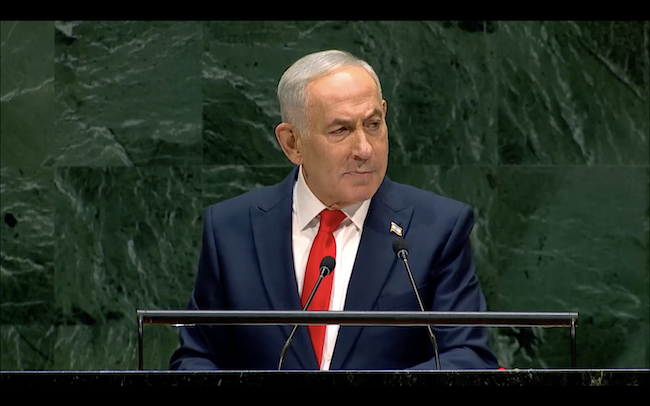
Prime Minister Benjamin Netanyahu used his address to the United Nations General Assembly on Thursday to defend Israel’s strikes on Iran’s nuclear program, saying the operation was necessary for the country’s survival and accusing foreign leaders who criticize Israel publicly of privately thanking it for acting against Tehran.

The overall message of Prime Minister Benjamin Netanyahu’s speech at today’s United Nations General Assembly essentially had three interconnected themes:

1) Iran is the larger strategic threat.

Netanyahu sought to make the case that Iran remains a danger not only to Israel but to the broader Western world.

2) Israel will not surrender its security interests because of international pressure.

He defended Israel’s actions in Gaza and rejected the idea that diplomatic condemnation, sanctions, or UN resolutions should dictate Israel’s security policy.

3) Israel’s case must be heard despite growing international criticism.

His presentation was deliberately confrontational: rather than apologizing for Israel’s conduct, he sought to turn the criticism back on Hamas, Iran, the Palestinian leadership, and countries he believes are applying a double standard to Israel.

Notably, the speech came amid a highly charged atmosphere: many delegates walked out as Netanyahu began speaking, according to CBS, while supporters and opponents demonstrated outside the UN.

AFSI Insight
Prime Minister Benjamin Netanyahu brought Israel’s case directly to the UN—and refused to bow to the international pressure campaign against the Jewish state. His message was unmistakable: Israel’s security and sovereignty are not negotiable.

Netanyahu confronted the threats from Iran and Hamas, defended Israel’s right to defeat terrorism, and rejected the push for a Palestinian state that would place Israel’s heartland and security at greater risk. For AFSI, this is especially significant: Judea and Samaria are not bargaining chips to be surrendered to satisfy foreign governments or an international agenda. Israel must stand firm against diplomatic coercion, sanctions, and the continued promotion of a failed two-state formula.

The Jewish people have the right to security, sovereignty, and a secure future in their historic homeland. Israel must determine its own future—not the UN.

Source:
Netanyahu: Leaders who condemn Israel privately thank us for striking Iran, by Itamar Eichner/Ynetnews, September 24, 2026


Open post

U.S. Holds the PA Accountable: No Reward for Terror or Lawfare

For the second time in two years, the United States has barred Palestinian Authority delegates and officials from attending the United Nations General Assembly (Sept. 8-28).

A Sept. 16 State Department media note similar in tone and content to one it released in July 2025 said the Palestinian Authority and Palestine Liberation Organization (PLO), the dominant force within the P.A., have failed to live up to their commitments, contradicting U.S. law.

Among the P.A.’s violations, the State Department listed its calling for action against Israel at international organizations, instigating the International Criminal Court (ICC) and International Court of Justice (ICJ) to pursue Israel, and bypassing negotiations by seeking unilateral recognition of statehood.

AFSI Insight
The U.S. decision to again restrict Palestinian Authority officials from attending the U.N. is a welcome acknowledgment that international lawfare, unilateral statehood campaigns and the glorification of terrorism cannot be treated as legitimate substitutes for negotiations. The PA’s continued efforts to pursue Israel through the ICC and other international bodies, while maintaining policies that reward terrorists and their families, demonstrate the need for meaningful consequences—not diplomatic accommodation.

AFSI supports holding the PA accountable and urges the United States to maintain pressure until Palestinian leadership genuinely ends terror payments and abandons its campaign to internationalize the conflict.

Source:
US freezes out Palestinians again at UN as dispute over ICC, terror payments deepens, by David Isaac/JNS, September 23, 2026


Open post

Guterres Targets Israel While Ignoring the Real Threat

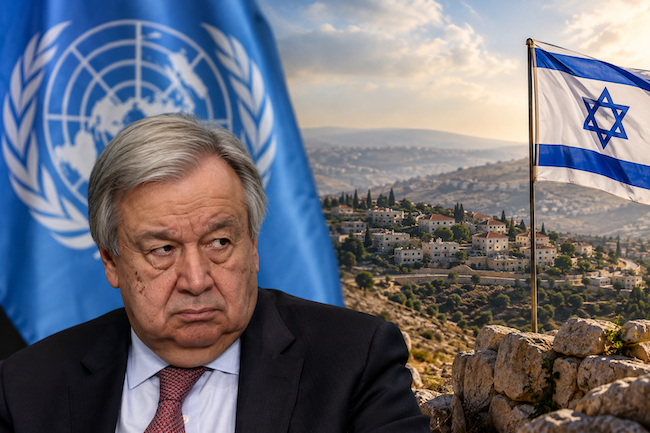
Finance Minister Bezalel Smotrich sharply criticized UN Secretary-General Antonio Guterres on Tuesday evening following his remarks against Israeli policy in Judea and Samaria during his speech at the United Nations General Assembly in New York.

“The UN Secretary-General’s wild incitement gives a tailwind to terrorism,” Smotrich wrote on X. “He is endangering the lives of half a million Jewish Israeli citizens living in Judea and Samaria.”

Smotrich continued his criticism of Guterres, citing UNRWA’s activities: “Someone who heads the organization that funded and provided cover for UNRWA – the operational arm of the Hamas terrorist organization in the October 7 massacre – cannot preach to us about anything.”

AFSI Insight
Smotrich’s rebuke of UN Secretary-General António Guterres highlights a fundamental problem with the UN’s approach to Israel: its repeated focus on condemning Israeli communities in Judea and Samaria while failing to adequately confront the terrorism and incitement that threaten their residents. AFSI agrees that rhetoric from senior UN officials can have real-world consequences when it ignores Israel’s security concerns and legitimizes narratives that place blame primarily on Israel. The safety of the hundreds of thousands of Jewish residents of Judea and Samaria must be treated as a legitimate security priority—not as an obstacle to be removed

Source:
Smotrich slams Guterres: ‘He endangers the lives of half a million Jews’, by Hezki Baruch/Israel National News, September 22, 2026


Open post

Hamas Must Know: Kidnapping Israelis Will Have Consequences

Israeli Defense Minister Israel Katz issued a stark warning to Hamas on Tuesday against attempting to kidnap a soldier or a civilian, during an address at a memorial ceremony for the fallen of the 1973 Yom Kippur War.

“In light of various intentions and intelligence reports, I hereby warn the terrorist organization [Hamas] and its supporters, from Iran to [Turkish President Recep Tayyip] Erdoğan,” Katz said at the National Memorial Hall for Fallen Soldiers at Mount Herzl Military Cemetery in Jerusalem.

“If even one Israeli soldier or civilian is abducted, the city of Gaza—with its homes and terrorist towers—will be evacuated southward of its one million residents,” he continued, “and it will be dealt with in the same manner in which Rafah and Beit Hanoun and 70% of the Gaza Strip were dealt with, until he is returned.”

He further stated, “This is the language that the jihadist terrorist organizations in Gaza and Lebanon understand, and this is the language we speak: evacuating the population, destroying the infrastructure, and taking the territory.”

AFSI Insight
Israel Katz’s warning makes clear that Hamas will face severe consequences for any attempt to abduct another Israeli soldier or civilian. AFSI has long emphasized that deterrence requires credible consequences—not empty threats. Hamas must understand that hostage-taking will not provide leverage but will instead bring intensified pressure against its terrorist infrastructure and control of Gaza. Israel’s refusal to withdraw from strategic security zones until Hamas is dismantled and Gaza is demilitarized is central to preventing another October 7.

Source:
Katz: Gaza City to be ‘evacuated’ if Hamas kidnaps Israeli soldier or civilian, by JNS Staff


Open post

One Standard, One UN: The Test Begins with Israel

António Guterres’s second term as UN secretary-general ends this December.

A successor is already being chosen, and by January the world will have a new man or woman occupying the most consequential unelected office on earth.

Every profile of every candidate will ask the same predictable questions: temperament, diplomatic experience, regional bloc, whether it is finally a woman’s turn.

Almost none will ask the only question that actually matters. Will this person apply one standard, or two?

The UN’s own record answers what it has been doing so far.

AFSI Insight
The next UN Secretary-General should be judged by whether the UN applies one consistent standard to every country—including Israel. The article highlights the stark disparity in UN resolutions and Human Rights Council actions targeting Israel compared with other countries. AFSI has long criticized this institutional double standard and believes the UN must end its disproportionate focus on Israel and return to principles of fairness, consistency, and equal treatment.

Source:
The ‘one standard’ test that awaits the next UN chief, by Linda Sadacka/World Israel News, September 18, 2026


Open post

Who Governs Israel: Elected Leaders or Unelected Judges?

Throughout 2023, Prime Minister Benjamin Netanyahu’s plans for a far-reaching judicial overhaul convulsed Israel and reverberated throughout the Diaspora, with liberal American Jewish leaders joining Israeli opponents of the plan in mass protests. Critics of the reforms in Israel and abroad perceived a threat to democratic norms. Proponents saw them as necessary to correct a judicial system that served as its own master and it felt was out of step with popular sentiment.

Then came Oct. 7 and the judicial reforms were largely forgotten.

As more time passed, Netanyahu’s government did eventually manage to push through some parts of the reform agenda. But the biggest changes were blocked or passed into law with the stipulation that they would only take effect after the next election. With Netanyahu seeking another term in office on Oct. 27, his plans to overhaul the judiciary are back – and more far-reaching than they were in 2023.

This election’s impact on the court will likely be even greater given that a massive two-thirds of the court’s seats could be vacated over the next government’s full term. That would give the incoming leader power to shape the court in ways beyond the judicial reform package, which has needed Knesset support.

AFSI Insight
AFSI supports judicial reform that restores a proper balance between Israel’s elected government, Knesset, and judiciary. Unelected judges and legal bureaucrats should not have the power to override the decisions of elected representatives without clearly defined constitutional limits. A strong democracy requires both an independent judiciary and accountable elected leadership, with individual rights protected and each branch operating within its proper authority. The proposed reforms deserve serious consideration as Israel works to restore that balance.

Source:
Judicial reform 2.0: How Netanyahu’s plans to reshape the courts could affect Israel’s democracy, by Tomer Almagor/Jewish Telegraphic Agency, September 18, 2026


Posts navigation

1 2 3 4 5 6 … 255 256 257
Scroll to top