Open post

Iran Cannot Be Trusted: Trump Declares MoU Dead

US President Donald Trump on Wednesday spoke about the exchange of strikes between the US and Iran, declaring an end to the ceasefire agreement.

At the NATO summit, Trump was asked whether the memorandum of understanding between the US and Iran had ended. He responded, “To me, I think it’s over. I don’t want to deal with them anymore.”

He added, “They’re led by sick people… I’ll speak to our negotiators. They want to negotiate – they’re good people… but they have to come back to me. As far as I’m concerned, it’s just a waste of time dealing with them.”

“These are evil sick people,” he continued. “They’re cancer, and you know what you have to do – you have to cut out cancer early.”

AFSI Insight
President Trump’s declaration that the Memorandum of Understanding with Iran is “dead” underscores what AFSI has maintained all along: the Iranian regime cannot be trusted to honor agreements or abandon its long-standing pursuit of nuclear weapons and regional aggression. Tehran’s actions have repeatedly demonstrated that diplomacy without verifiable enforcement only provides the regime with time and opportunity to strengthen its military capabilities. Trump’s remarks reflect growing recognition that negotiations with a regime committed to Israel’s destruction are unlikely to produce lasting security.

AFSI believes the focus must now shift from failed diplomatic efforts to sustained pressure on Iran through strict sanctions, diplomatic isolation, and unwavering support for Israel’s right to defend itself and achieve victory over its enemies. We continue to argue that only a policy of strength and deterrence—not concessions or unenforceable agreements—can prevent Iran from threatening Israel, the United States, and the broader Middle East.

Source:
Trump: MoU with Iran is dead, they are crazy, by Israel National News, July 8, 2026


Open post

Terrorism Cannot be Rebranded

Hamas announced Monday the resignation of its Gaza “Emergency Committee,” the Hamas-run administrative body governing the Strip, in what the terror group described as a step toward transferring authority to the technocratic National Committee for the Administration of Gaza (NCAG). The announcement addresses one of the central conditions of the ceasefire brokered by President Trump in October 2025, yet mounting evidence shows Hamas has no intention of relinquishing actual control over Gaza.

Ismail al-Thawabta, head of Hamas’s government media office, told AFP that Mohammed al-Farra, head of the government’s emergency committee, “has officially submitted his resignation.” Hamas’s government said in its announcement that civil servants would continue working as usual, describing them as “public employees who are ready to work under the responsibility of the National Committee for the Administration of Gaza.”

An Israeli official dismissed the move outright, telling the Kan public broadcaster it was “spin without any meaning.” The official said Hamas fears being declared in violation of the ceasefire agreement and is stalling through theatrics.

AFSI Insight
Hamas’s announcement that it is stepping aside from governing Gaza should be viewed with extreme skepticism. AFSI believes this is a calculated public relations maneuver—not a genuine surrender of power. Hamas has made no commitment to disarm, dismantle its terrorist infrastructure, or abandon its genocidal ideology. As long as it retains weapons, leadership, and influence, any claim that it is “leaving” Gaza is meaningless. Reports indicate that while Hamas has proposed transferring civilian administration to a technocratic body, it has not agreed to relinquish its military capabilities, which Israel has consistently identified as the central issue.

AFSI maintains that Israel must not be pressured into accepting cosmetic political changes in place of real security. Gaza cannot have a peaceful future while Hamas remains armed and capable of rebuilding its terrorist network. Any post-war arrangement must ensure the complete removal of Hamas from both political and military power, the return of all hostages, and guarantees that Gaza can never again serve as a launching pad for attacks against Israel. Terror cannot simply change its title and expect the world to believe it has changed its nature.

Source:
Hamas says it’s stepping down from Gaza. Nobody’s buying it., by Tamar Stein/Israel365News, July 9, 2026


Open post

Boycotting Jews Won’t Bring Peace

Ireland’s parliament on Tuesday approved legislation called The Israeli Settlements (Prohibition of Importation of Goods) Bill banning the import of goods produced in Israeli communities in Judea and Samaria, marking one of the most far-reaching trade measures adopted by a European country.

The center-right coalition government said the legislation was drafted in response to the 2024 advisory opinion of the International Court of Justice, which declared Israel’s presence in Judea and Samaria, eastern Jerusalem and Gaza illegal under international law.

The move follows months of criticism from Washington. In June, the U.S. State Department warned that the proposed legislation amounted to “unhelpful virtue-signaling” that “does not serve the cause of peace in the Middle East, help feed Gazans or work toward the outcomes Ireland says it seeks.”

AFSI Insight
AFSI condemns Ireland’s decision as a discriminatory political measure that singles out Jewish communities while ignoring territorial disputes and occupations elsewhere in the world. This bill is not a step toward peace but an endorsement of the anti-Israel boycott movement, rewarding efforts to delegitimize Israel rather than encouraging negotiations. AFSI maintains that Judea and Samaria are the heartland of Jewish history and that Jews have every legal and moral right to live there. AFSI warns that targeting Israeli businesses and families under the guise of international law risks fueling antisemitism, undermining democratic allies, and damaging Ireland’s own relationship with Israel and its Western partners.

Source:
Ireland approves bill banning imports from Israeli communities in Judea and Samaria, by JNS Staff, July 8, 2026


Open post

Jewish History in Hebron is Not Negotiable

For the first time in 2,000 years, Jewish authorities are conducting conservation work at the Tomb of the Patriarchs, where, according to the Bible, the patriarchs and matriarchs of the Jewish people, Abraham and Sarah, Isaac and Rebecca, and Jacob and Leah are buried.

The maintenance and safety upgrades for Judaism’s second holiest site include electrical renovations, air conditioning, improved drainage, new lighting and a fire protection system.

The renovation is helping transform the site into a world-class destination, Yishai Fleisher, director of international and government affairs for the Jewish Community of Hebron, told JNS on Thursday.

“It has a really high-end look and feel and, of course, it will make worship inside much more pleasant, more moving and more spiritual. It also shows the State of Israel is engaging with the site and recognizes its importance to our heritage, tourism and the identity of Israel,” Fleisher said.

AFSI Insight
Israel’s decision to undertake conservation work at the Tomb of the Patriarchs represents far more than a preservation project—it is a powerful affirmation of Jewish history, heritage, and sovereignty in Hebron. This project is a long-overdue correction of decades of neglect and political obstruction. Preserving and protecting the Tomb of the Patriarchs ensures that future generations will be able to access and appreciate one of the foundations of Jewish civilization. The effort also reinforces Israel’s responsibility as the guardian of Jewish holy places, particularly in Judea and Samaria, where historical and religious sites are often subject to competing political claims.

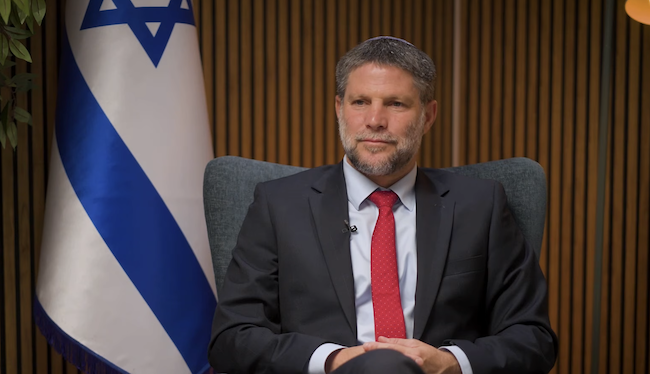
At a time when Jewish ties to Hebron are frequently challenged or minimized internationally, the conservation work sends a clear message: Jewish history in Hebron is neither temporary nor negotiable. AFSI welcomes this historic initiative as an important step in safeguarding the Jewish people’s ancestral heritage and strengthening Israel’s presence at one of its most sacred sites. We thank Finance Minister Bezalel Smotrich, who transferred approval authority from the P.A. to an Israeli body, clearing the way for the renovations.

Source:
First time in 2,000 years: Israel carrying out conservation work at Tomb of the Patriarchs, by Amelie Botbol/JNS, July 5 , 2026


Open post

Solomon’s Pools Becomes the Latest Sovereignty Flashpoint

The Palestinian Authority is preparing to lay the cornerstone for a new mosque at Solomon’s Pools, the ancient Jewish waterworks site just south of Jerusalem and adjacent to Efrat in Gush Etzion.

The move comes as Israeli ministers and Knesset members have begun taking public steps to return the historic site to Israeli control, arguing that its placement under Palestinian Authority control during the Oslo process was the result of a cartographic mistake.

Solomon’s Pools, a massive ancient water system near Bethlehem, has long been considered one of the most impressive hydraulic engineering projects in the Land of Israel. Israeli officials who recently toured the site described it as a Jewish heritage treasure that has been neglected, deliberately damaged, and politically exploited under PA control.

Finance Minister Bezalel Smotrich, who also toured the site, said there is no comparable historical water system anywhere else and called it “absurd” that such an important heritage site remains under PA control.

AFSI Insight
This is another attempt by the PA to alter the character of a site with deep Jewish historical significance and to strengthen Palestinian claims over an area long connected to Jerusalem and the Jewish people. Solomon’s Pools, an ancient water system that supplied Jerusalem for centuries, is increasingly becoming a focal point in the broader struggle over heritage, sovereignty, and control in Judea.

AFSI supports Israeli initiatives to restore oversight, preserve the archaeological site, and ensure access for Israelis and visitors. Neglect of important Jewish historical sites under Palestinian administration has endangered their preservation and weakened recognition of their Jewish roots.

This is not merely about construction of a mosque, but about safeguarding Jewish history, preventing the erasure of Israel’s heritage, and reinforcing Israel’s responsibility to protect and develop sites of national and biblical importance throughout Judea and Samaria. The plans must be halted without any delay.

Source:
PA Moves to Plant Mosque at Solomon’s Pools as Israel Pushes to Restore Control, by The News Desk/The Jewish Edition, July 7, 2026


Open post

Israel’s Warnings Proven Right Again

Continued activity at Iran’s underground Pickaxe Mountain complex is fueling new concerns over Tehran’s compliance with its nuclear agreement with the United States, with a Washington-based nuclear watchdog citing fresh satellite imagery and the continued absence of international inspections at the site.

The Institute for Science and International Security said the International Atomic Energy Agency has never been permitted to inspect the facility, which is buried deep within Iran’s Zagros Mountains.

According to The Institute for Science and International Security, imagery captured in late June indicates that work at the underground installation has not stopped. The institute said such activity appears incompatible with the memorandum of understanding, arguing that Iran is expected to preserve existing conditions at nuclear-related sites until inspection and verification measures are completed.

AFSI Insight
Iran’s reported construction of a new underground nuclear facility while simultaneously engaging in negotiations with the United States reinforces a longstanding concern: the Iranian regime has consistently used diplomacy to buy time while advancing its nuclear ambitions. We are not surprised by this report, and it continues to raise serious questions about Tehran’s intentions and its willingness to honor any future commitments.

This development underscores why Israel cannot rely on promises from a regime that openly calls for its destruction. Any agreement that fails to require full transparency, verifiable inspections, and the complete dismantling of Iran’s nuclear weapons infrastructure risks endangering not only Israel but regional and global security. The lesson remains clear: vigilance, strength, and credible deterrence—not wishful thinking—are essential to preventing a nuclear-armed Iran.

Source:
Iran caught building underground nuclear facility while negotiating with US, by Vered Weiss/World Israel News, July 4, 2026


Open post

Hints of Historic Change

Prime Minister Benjamin Netanyahu declined to say directly whether he supports reestablishing Israeli settlements in the Gaza Strip, saying in a television interview Tuesday that he prefers “actions” to declarations.

During a wide-ranging interview on Channel 14’s “The Patriots,” Netanyahu was asked whether Finance Minister Bezalel Smotrich’s recent claims that Israel has already drafted plans to establish three towns in northern Gaza were true.

Netanyahu did not give a yes-or-no answer, instead stating that he prefers “action” over “talk.”

“The big question is whether one should act or to talk,” Netanyahu said. “Sometimes you have to separate the two. Therefore, I will not say any more on the subject.”

Netanyahu has previously avoided fully endorsing a return to Gaza settlements, while insisting that Israel must maintain overriding security control after the war.

AFSI Insight
Prime Minister Netanyahu’s latest remarks suggesting that Jewish communities could one day return to Gaza mark a significant departure from the failed assumptions of the 2005 Disengagement. While he stopped short of announcing a formal policy, his refusal to rule out renewed Israeli settlement reflects a growing recognition that abandoning strategic territory brought Hamas to Israel’s doorstep—not peace. AFSI believes that any lasting solution for Gaza must ensure permanent Israeli security control, eliminate the terrorist infrastructure once and for all, and reject international pressure to recreate the conditions that enabled October 7. Today marks 1000 days since that horrendous massacre and 1000 days of war on 7 fronts. The completion of this war must leave Israel in the best possible situation. Gaza must have a different future; it must never again become a launching pad for jihadist terror against the Jewish State.

Source:
Netanyahu drops hints on Gaza resettlement plans, by David Rosenberg/World Israel News, July 1, 2026


Open post

Otniel Expansion Marks Another Sovereignty Milestone

The Higher Planning Council granted final approval on Wednesday for plans to construct 229 housing units across Judea and Samaria.

Among the approved plans are 156 housing units in the community of Otniel, located in the Hebron Hills, following the completion of the planning process and the resolution of all objections.

Additionally, final approvals were granted for 52 housing units in Kfar Adumim and 21 housing units in Elkana. The plans are expected to facilitate the expansion of these communities in accordance with the authorized planning procedures.

Smotrich stated, “This is a national initiative that solidifies our hold on the ground.”

AFSI Insight
AFSI welcomes the approval of 156 new housing units in Otniel as another important step in strengthening Israel’s permanent presence in Judea. Along with additional homes approved for Kfar Adumim and Elkana, this decision reinforces the principle that Jewish communities should be allowed to grow naturally and securely in their historic homeland. The expansion follows the completion of all required planning procedures and reflects a commitment to building facts on the ground that enhance both security and national resilience.

For AFSI, communities like Otniel are not obstacles to peace—they are vital strategic and historic assets. Every new home strengthens Israel’s hold on the land, supports families committed to Zionism, and helps ensure that Judea and Samaria remain an integral part of Israel’s future. Continued development of these communities is essential to safeguarding Israel’s security and advancing the cause of Jewish sovereignty.

Source:
Major milestone for Otniel: 156 new housing units approved, by Israel National News, July 2, 2026


Open post

Pioneers Betrayed (Again)

Residents of Kochav Yehuda Farm, located between the communities of Efrat and Tekoa in Gush Etzion, reported that dozens of Border Police officers, accompanied by Civil Administration inspectors and heavy machinery, raided the farm on Tuesday and demolished the home of the family living there, as well as the residential building used by the young men at the site.

According to the residents, the operation also destroyed the farm’s water tank, which supplied drinking water. They further claimed that Arab laborers were brought to the site to carry out the demolition and damaged equipment and building materials with hammers and axes.

The residents alleged that, in an unusual move and contrary to standard procedures, the family home was demolished without allowing them to remove their personal belongings and furniture. They said the contents of the home were buried beneath the rubble during the demolition.

AFSI Insight
Yet again, this latest demolition is evidence of and inconsistent Israeli policy toward Jewish communities in Judea and Samaria during wartime.

The demolition of Kochav Yehuda Farm is another troubling example of Israel undermining its own pioneering communities while they serve as the country’s first line of defense. Rather than strengthening Jewish presence in strategic areas of Gush Etzion, government authorities destroy homes, arrest residents, and displace families committed to safeguarding the land. AFSI believes these actions send the wrong message at a time when Israel should be reinforcing, not dismantling, communities that contribute to the nation’s security and sovereignty. The answer to threats against Israel is to build and strengthen Jewish communities throughout Judea and Samaria—not demolish them.

Source:
Kochav Yehuda farm in Gush Etzion demolished, by Israel National News, June 30, 2026


Open post

Iran’s Setback

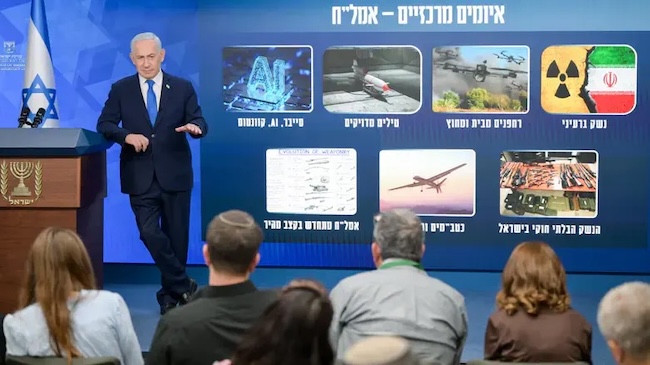
Prime Minister Benjamin Netanyahu hailed the US-brokered agreement signed between Israel and Lebanon in a broadcast news conference immediately after the conclusion of Shabbat on Saturday night.

Speaking to reporters, Netanyahu said “a framework of understandings” was reached that “allows us to move toward ending the conflict and, with God’s help, later reach a peace agreement between the two countries.”

Under the agreement, “the United States and Lebanon recognized Israel’s right to maintain a security zone until no threat is posed to Israel from Lebanon,” he said. “This is a major blow to Iran and Hezbollah, and to Iran, which tried to force us to withdraw from south Lebanon,” Netanyahu noted.

The prime minister pointed to the security zone in southern Lebanon on a map depicting the “yellow line” that marks the border of the newly created buffer area.

“I want to remind you what was in Lebanon. Hezbollah had 150,000 missiles and rockets. And we eliminated about 90% of this huge stockpile,” Netanyahu said. “We shocked them with beepers, we eliminated Nasrallah, we killed the commanders of the Radwan Force. Just in the last two weeks we killed more than 200 terrorists.”

AFSI Insight
This agreement is less a Lebanon-Israel bilateral breakthrough and more a setback for Iran’s regional “proxy axis,” particularly its it affects its influence through Hezbollah. Netanyahu’s characterization of the deal as a “major blow” to Hezbollah is evidence that Iranian-backed deterrence structures are eroding. While acknowledging the agreement as “historic” in form, any diplomatic framework is only meaningful insofar as it preserves Israel’s right to defend itself and does not constrain IDF operations. The deal is a positive strategic development against Iran and Hezbollah, but only insofar as it does not limit Israeli military freedom or compromise long-term security control in the north.

Source:
Netanyahu Hails Historic Lebanon Deal as ‘Major Blow to Iran and Hezbollah’, by Hana Levi Julian/The Jewish Edition, June 27, 2026


Posts navigation

1 2 3 4 246 247 248
Scroll to top