
Open post

Tuvia on Judea and Samaria: If This is Yours Take It!

Tuvia Tenenbom, spoke to Arutz Sheva-Israel National News, following the publication of his new book.

After living with the Europeans and writing about them, and living with the Haredim and writing about them, and living with the Muslims and writing about them, Tenenbom decided to move to a community in Samaria and write about life in the communities of Judea and Samaria. Alongside his admiration for the local residents, he also offers considerable critique.

Tenenbom explains that his book, Excuse Me, Is This Yours? came about, as in previous cases, following a suggestion from his editor to go out and write about the residents of Judea and Samaria, similar to earlier assignments where he was asked to integrate into various communities and write about them.

To gain a more complete picture, Tenenbom also met with opponents of the Jewish communities in Judea and Samaria, who helped him access Arab areas, meet representatives from the Palestinian Authority, and enjoy authentic knafeh from Shchem (Nablus). In refugee camps, he refused to be afraid, even when identified as Jewish by Arabs. Fear, he says, is characteristic of those who have not come to the land and do not truly know the Arabs.

Tuvia was also struck by the realization that Israel has controlled Judea and Samaria for nearly sixty years but has yet to apply its sovereignty over the area. Logically, if the land belongs to Israel, there is no reason not to apply sovereignty.

AFSI’s take:
Tuvia has the most insightful and objective view of the numerous issues facing Judea and Samaria. His book will be a must read for all Zionist activists.
Source:
Tuvia Tenenbom: ‘Is Judea and Samaria yours? You gotta believe it’, by Yoni Kempinski/Israel National News, April 6, 2026


Open post

This Was Not Necessary as War Rages Against Israel

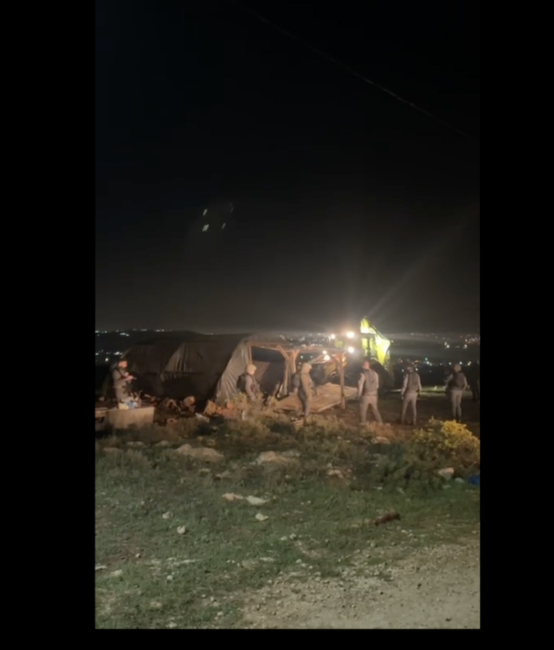
Sunday night was especially tense in Samaria: a large force of Border Police officers and Civil Administration personnel raided a new encampment recently erected near the community of Migdalim.

During the operation, which began in the middle of the night, the forces destroyed several structures and seized logistic equipment and personal items belonging to the residents.

The raid enraged the residents of the area and settlement activists who arrived at the scene to protest the eviction.

After the forces concluded the demolition and left the site, a serious security incident occurred. Hundreds of Palestinian Arabs from nearby villages, who noticed the forces’ presence and the demolitions, began to gather and march toward the encampment.

According to residents, during the incident, incitement was heard from the nearby villages, with the muezzin encouraging the crowds. At one point, a real danger arose for the families in the area.

Intense clashes broke out at the scene, during which the Arab rioters threw rocks and launched fireworks toward the Jewish civilians and the security forces who remained to defend the area.

The residents claim that IDF forces in the area did not initially intervene, and only after a while did additional residents from the area arrive and assist in repelling the rioters.

AFSI’s take:
A raid of this nature is entirely unnecessary. The occurrence of the operation during nighttime, coupled with the involvement of a “large force,” highlights the sensitivity and potential volatility of such situations. This was merely a small encampment of peaceful Jews, not a group of terrorists intent on annihilating Israel. In wartime, this only exacerbates tensions for all inhabitants. We encourage focus on the application of sovereignty throughout Judea and Samaria, and raids like this will cease. Without doing so, Israel’s sovereignty remains under siege.

Source:
Hundreds of Arabs descend on encampment following eviction, by Israel National News, April 6, 2026


Open post

Dilemma or Lack of Oversight?

The chief oversight body responsible for tracking U.S. foreign assistance says United Nations agencies are stonewalling a probe into their ties to Hamas. The agencies have failed to provide investigators with information that could identify their employees as affiliates of the terror group, according to a non-public report transmitted to Congress and obtained by the Washington Free Beacon.

The U.S. Agency for International Development (USAID) inspector general’s office, an investigative entity separate from USAID, sent letters to six separate U.N. agencies in December 2025 asking them to name all employees “who worked on U.S.-government funded awards” and provide their contact information and “date and place of birth.” The office also asked the agencies to detail their “interactions with Hamas,” among other requests.

“OIG has consistently raised concerns about UN cooperation, transparency, and willingness to provide information to investigators who request UN records pertinent to U.S.-funded awards,” it continues.

AFSI’s take:
That U.N. agencies working in Gaza remain vulnerable to Hamas infiltration points to a long-standing structural dilemma, i.e., Hamas’ rule in Gaza, rather than a simple failure of oversight. Ultimately, the tension between humanitarian access and security control is inherent in areas like Gaza. Addressing it requires constant adjustment, external scrutiny, and political will—not just from the U.N., with its consistent anti-Israel bias, but from all stakeholders involved.

Source:
UN Agencies Are Stonewalling a Probe Into Their Employees’ Ties to Hamas, US Investigators Say in Report to Congress, by Adam Kredo/Washington Free Beacon, April 3, 2026


Open post

Ben-Gvir: “Problematic and Incorrect”

The Supreme Court held a hearing on Sunday on a petition requesting permission to open the Western Wall and the Temple Mount to hundreds of worshippers.

The petition followed a ruling a day earlier allowing large-scale demonstrations in Habima Square, a decision that drew criticism from religious and traditional communities, who argued it reflected unequal enforcement of freedom of assembly.

During the hearing, Court President Yitzhak Amit emphasized the need to balance competing considerations. He noted that seeing the Western Wall largely empty during the Priestly Blessing broadcast was “embarrassing,” describing the site as the spiritual center of the Jewish people. However, he also cautioned that differences between secured areas like Habima’s parking facilities and the more exposed Western Wall plaza must be taken into account.

Ben-Gvir reiterated his criticism of the earlier court decision permitting demonstrations, calling it “problematic and incorrect.” He warned against mass gatherings at demonstrations or holy sites, urging the public to act responsibly. At the same time, he argued that once protests were approved, authorities could not impose stricter limitations on access to the Western Wall and Temple Mount, saying such a distinction would unfairly discriminate against worshippers.

AFSI’s take:
This petition challenges the long-standing status quo at the Temple Mount, where Jewish prayer is highly restricted when it should never be. When other religions are not fully restricted at the Temple Mount or other sacred places of worship neither should Israelis be. We understand that safety at the Western Wall and on the Temple Mount are a valid concern during this war, but we would hope that innovative Israelis would find a way to allow at least small groups to be present at those most meaningful sites. It’s that simple.

Source:
Police request approval to open Western Wall and Temple Mount, by Israel National News, April 5, 2026


Open post

Next Year in Judea and Samaria!

Doubling the number of Jews in Judea and Samaria is the strategic imperative of the next two years. Op-ed by Yonaton Behar.

For decades, Israelis have debated the future of Judea and Samaria. Some speak about borders, others about diplomacy, and still others about security arrangements. But after the trauma of the October 7 attacks, one truth has become unmistakably clear: Israel cannot afford illusions about geography, sovereignty, or demography.

The next two years present a rare and historic window of opportunity. With Donald Trump serving as President of the United States, Israel has an administration in Washington that has previously demonstrated unprecedented understanding of Israel’s historical rights and security needs.

Today, Israel must apply that lesson to Judea and Samaria. First and foremost, Judea and Samaria are not foreign lands. They are the cradle of Jewish civilization. Hebron, Shiloh, Beit El, and countless other places in this region are where the Bible unfolded and where the Jewish nation first took root. For the Jewish people, these hills are not merely strategic terrain-they are sacred inheritance.

For thousands of years, Jews prayed to return to the land promised to our forefathers. The connection between the Jewish people and this land is recorded in Scripture, reaffirmed through centuries of exile, and realized in the rebirth of the State of Israel. Building Jewish communities in Judea and Samaria is therefore not an act of expansion-it is an act of return.

The Million-Jew Plan: Israel should adopt a clear national goal: bring one million Jews to Judea and Samaria within the next two years. This is ambitious-but entirely achievable.

AFSI’s take:
Passover celebrates some of the greatest miracles ever experienced in Jewish history and is a time to reach above nature to the miraculous. So we say, L’Shana Haba’ah for a Whole Israel!

Source:A million Jews in Judea and Samaria, by Yonaton Behar/Israel National News, April 1, 2026

Open post

Maoz Tzur Deepens Roots in Binyamin

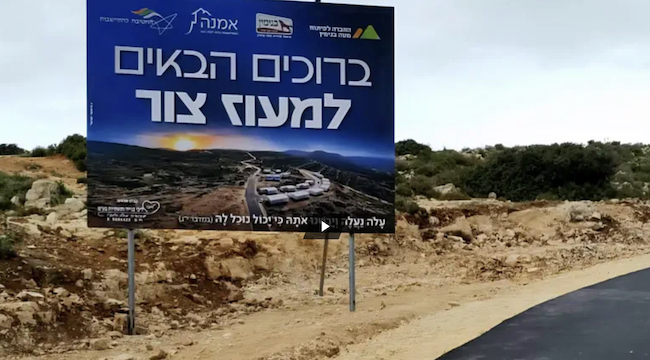
In the days leading up to the Seder night, the first families have moved into the newly established town of Ma’oz Tzur in western Binyamin, marking a significant step in the creation of an official community in one of the most strategically sensitive corridors between Jerusalem and central Israel.

Unlike many of the communities set up in recent years throughout the region, Ma’oz Tzur has been formally approved. The site is already equipped with paved access roads, water and electricity infrastructure, and rows of prefabricated homes positioned along the ridge. A sign at the entrance welcomes visitors to the new town.

With the arrival of the first families, the town is now transitioning from planning to reality. Israel Gantz, head of the Binyamin Regional Council and chairman of the Yesha Council, said the move reflects a broader national effort. “In the midst of war, we are strengthening our presence in the heart of the country. Especially on the eve of the Seder night, we are deepening our roots here. This is the first town following dozens of outposts in Binyamin, but it will not be the last. We are here to stay.”

AFSI’s take:
We couldn’t be more pleased to learn of this new community.

Source:
Passover Eve: New community breaks ground in Binyamin, by Israel National News, April 1, 2026


Open post

Controversial Decision or Overdue Measure?

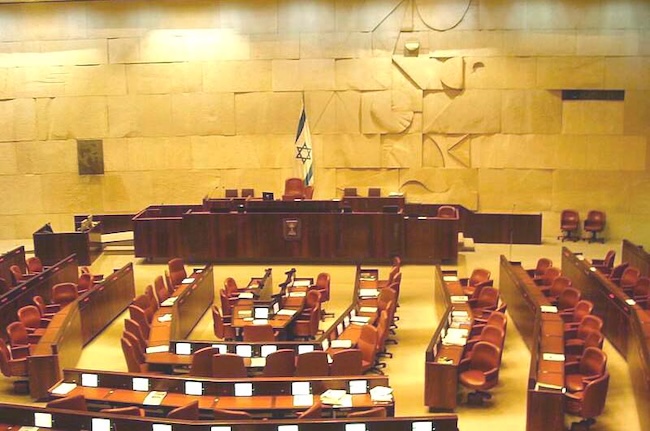
The Knesset plenum on Monday evening approved a bill allowing the death penalty to be imposed on terrorists. The measure was initiated by coalition partner Otzma Yehudit, led by party chairman and National Security Minister Itamar Ben-Gvir, in its second and third readings. The move marks a significant shift in Israel’s legal and security framework.

The State of Israel already has a death penalty on the books, with capital punishment existing in Israeli law for offenses such as treason and waging war against the state. Nonetheless, the death penalty has been applied only once, in the 1962 trial of Nazi war criminal Adolf Eichmann, the first and last person to be executed in the Jewish State to this point.

The new law will enable courts to impose the death penalty without a request from prosecutors and without requiring a unanimous vote by a panel of judges, relying instead on a simple majority decision. Military courts in Judea and Samaria will also be empowered to hand down death sentences, with Israel’s defense minister empowered to submit an opinion.

AFSI’s take:
Israel bears the duty to safeguard its citizens. The continuous acts of terrorism directed at the Jewish Nation State, most recently the horrific massacre on October 7, 2023, necessitate significantly more stringent actions than those currently in place. Regrettably, the true effectiveness of this measure in the long term will only be revealed once this new legislation is implemented. It could still face judicial review as well as be challenged. It remains uncertain whether it will successfully deter potential terrorists from attempting to harm Israelis.

Source:
Historic Vote: Knesset Approves Death Penalty for Terrorists, by Hana Levi Julian/The Jewish Edition, March 30, 2026


Open post

“Nuclear Dust” is Key Condition to End War

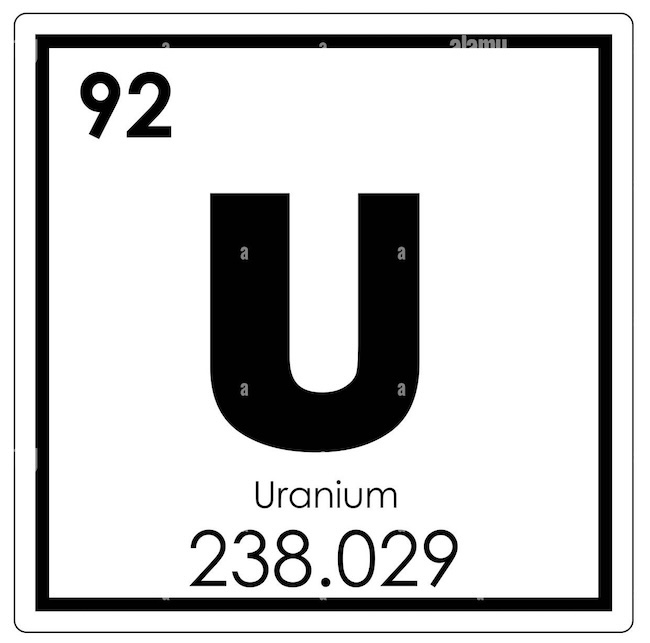
The Trump administration is considering a plan to move nuclear materials out of Iran. The goal is to remove the nuclear threat once and for all, The Wall Street Journal reported Monday morning. President Donald Trump has not yet decided whether to give the order, but he is said to be open to the idea because it could help achieve his main goal of stopping Iran from ever developing a nuclear weapon.

Before Israel and the United States carried out a series of airstrikes on Iran in June last year, the country was believed to have a large stockpile of enriched uranium. According to international estimates, Iran had more than 400 kilograms of uranium enriched to 60%, along with nearly 200 kilograms enriched to 20%.

Uranium enriched to 60% is already very close to weapons-grade, which is about 90%. Experts say this means the material could be further refined into nuclear weapons relatively quickly.

The 20% enriched uranium is also important because it can be more easily turned into higher-grade material, making it another key part of Iran’s nuclear stockpile.

AFSI’s take:
The demand for uranium, or “nuclear dust,” is strategically sound, as preventing Iran from reconstituting a nuclear program is a valid objective. The diplomatic approach, wherein Iran voluntarily surrenders the material, is significantly more desirable but is contingent upon negotiations that have not yet officially commenced. Should the option of forced extraction be pursued, it would constitute one of the most intricate and perilous military operations in recent US history. If this objective is accomplished, the question arises as to how Iran’s leadership can be definitively prevented from recommencing the construction of a nuclear weapon. We posit that the current regime will perpetually strive to achieve nuclear capability. Our aspiration is for their complete removal and replacement with a government that will — in the words of Crown Prince Reza Pahlavi at the recent CPAC conference — substitute the slogan “Death to Israel” with “G-d Bless Israel.”

Source:
Trump’s Secret Plan to Extract Iran’s Enriched Uranium, by David Israel/The Jewish Edition


Open post

Terrorism Support Continues

Yesha Council, the umbrella organization of Jewish municipal councils in Judea and Samaria, accused Ramallah Governor Laila Ghannam of holding support meetings with multiple released terrorists, including several freed in recent prisoner deals, and said these visits reflect the Palestinian Authority’s ongoing glorification of terrorism.

According to evidence published by the council, Ghannam has recently held a series of meetings with many convicted terrorists, some involved in deadly or attempted attacks against Israelis.

The Yesha Council stressed that documentation of the meetings appeared on Ghanam’s official Facebook page.

AFSI’s take:
This report serves as evidence that too many aspects of terrorism still need to be completely eliminated.

Source:
Yesha Council: Ramallah Governor Held Terrorist Support Meetings, by Kostis Konstantinou /TPS-IL, March 30, 2026


Open post

Defending the Border

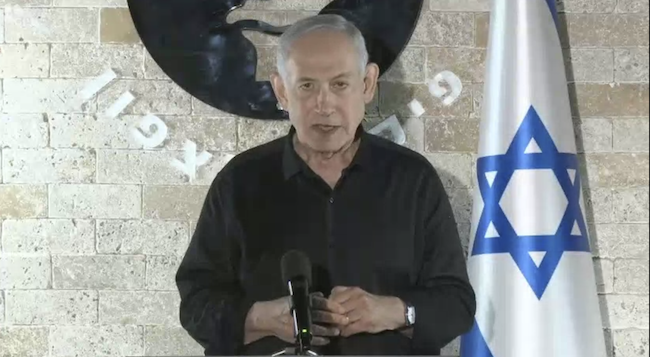
Prime Minister Benjamin Netanyahu held a situational assessment on Sunday at the IDF Northern Command with Defense Minister Israel Katz, IDF Chief of Staff Eyal Zamir, and division commanders.

In remarks after the meeting, the Prime Minister said Israel is currently engaged in a “multi-arena campaign,” adding that Israeli forces are “striking with immense force against Iran and its proxies.” “We are achieving great accomplishments, achievements that are creating visible cracks in the terrorist regime in Tehran,” he said.

He stressed that Israel has shifted its operational posture. “Instead of them surprising us, we are surprising them. We are the ones taking action we are the ones attacking, we are the ones taking the initiative, and we are deep within their territory,” Netanyahu said.

According to Netanyahu, Israel has also redefined its security doctrine, establishing multiple security zones beyond its borders.

The expansion in Lebanon, he said, is intended “to finally thwart the threat of invasion and to push the anti-tank missile fire away from our border.”

AFSI’s take:
Netanyahu aims to change the security dynamics at Israel’s northern border; Establishing an ample security or buffer zone is a necessary element of achieving this.

Source:
Netanyahu in northern Israel: ‘We are expanding the security zone in Lebanon’, by Uzi Baruch/Israel National News, March 29, 2026


Posts navigation

1 2 3 12 13 14 15 16 17 18 252 253 254
Scroll to top